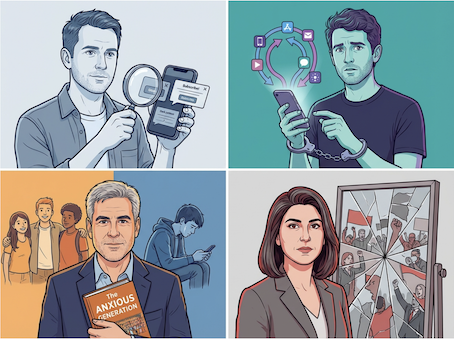

The digital world—especially social media—was supposed to connect us. Instead, it ended up controlling us. Our habits aren’t failures of willpower; they are the results of a war for our minds.
Meet the four thinkers who saw the battle coming—and are fighting to win back our digital souls.
-
The Architect: Harry Brignull exposed dark patterns—manipulative design tricks engineered to trap us in choices we didn’t mean to make.
-
The Sociologist: Zeynep Tufekci mapped how algorithms distort reality, accelerate polarization, reward outrage, and destabilize public life.
-
The Ethicist: Tristan Harris revealed that doomscrolling isn’t a failure of willpower; it’s the business model that keeps your nervous system in a loop.
-
The Guardian: Jonathan Haidt connected the smartphone era with the explosion of anxiety, loneliness, and depression among teens.
Stop Calling It a Habit. It’s a System Installation.
Every “habit” we blame ourselves for—checking notifications, tapping open apps, scrolling long after we’re numb—was engineered to bypass our judgment.
Infinite scroll wasn’t invented for your convenience. Autoplay wasn’t created for your entertainment. Notifications weren’t designed to help you.
They were built to train you.
But what was installed can be uninstalled.
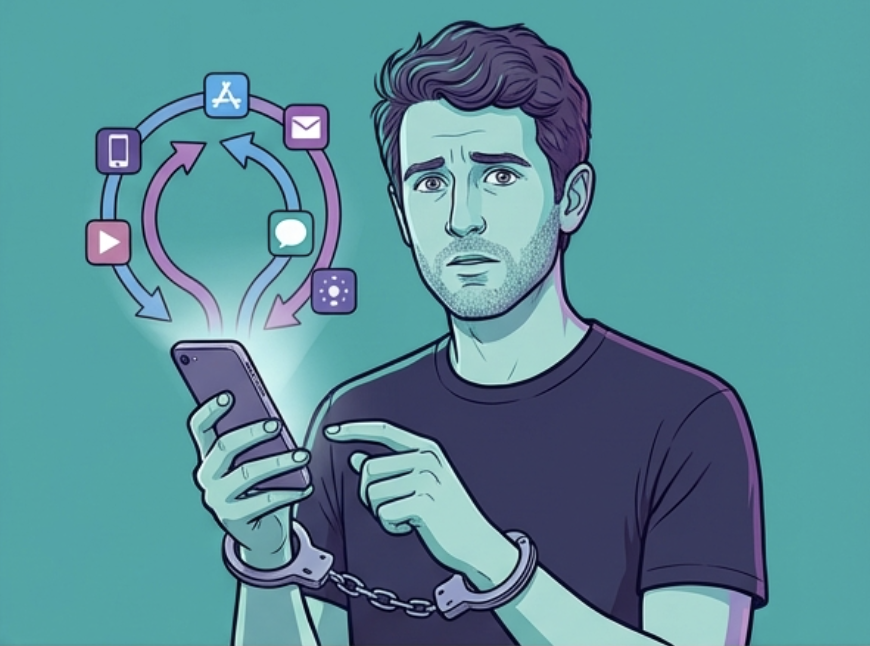
Tristan Harris (USA). Often called the “conscience of Silicon Valley,” this former Google Design Ethicist and Stanford computer scientist left Big Tech to co-found the Center for Humane Technology. The face of the Netflix documentary The Social Dilemma, Harris exposes how the attention economy is specifically engineered to hijack our nervous systems.
The World Built on Dark Patterns
When Harry Brignull coined the term dark patterns in 2010, it landed like a polite academic critique. Today, it reads like prophecy.
Dark patterns—manipulative design choices that nudge, trick, and trap users—have become the invisible grammar of digital life:
-
The “close” button that isn’t really a close button
-
The false countdown timer
-
The unsubscribe link in mouseprint
-
The endless, engineered scroll
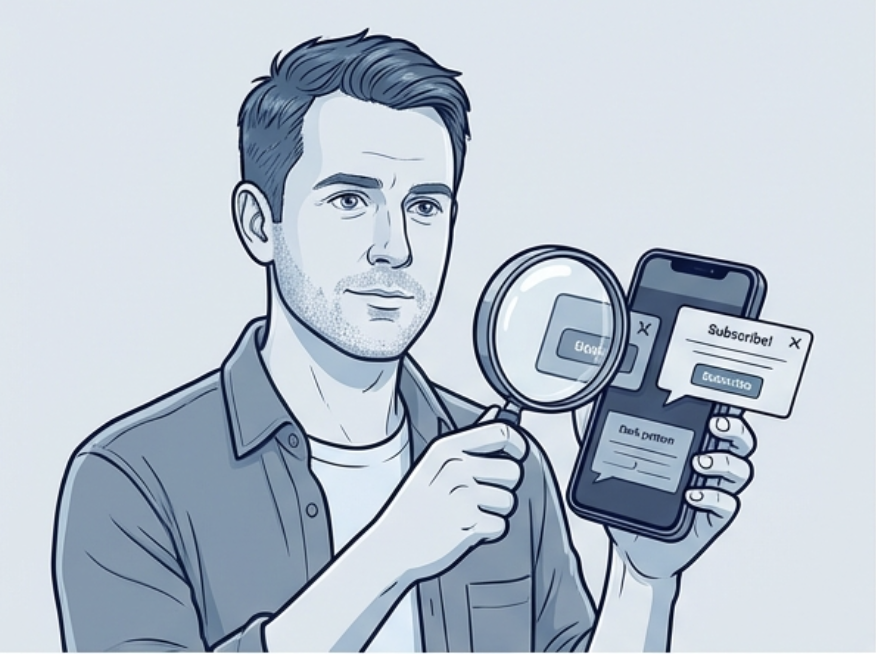
Harry Brignull (UK). The British cognitive scientist who unmasked Dark Patterns—the manipulative tricks hidden in the code of our favorite apps. Based in the UK, Brignull now serves as a global expert witness, taking the fight against deceptive design from the browser to the courtroom to protect consumer rights.
The Center for Humane Technology warns that the attention economy has evolved into an “arms race for human weakness.” Tristan Harris describes doomscrolling as a rewiring of the adult brain—producing a dopamine-spiking cycle of outrage, anxiety, novelty, and numbness. Each swipe teaches the machine a little more about how to hook us next.
You’re not addicted; your nervous system has been drafted into a business model.
When the Algorithm Raises Your Children
Jonathan Haidt’s work has become a lighthouse for parents drifting in a fog of digital uncertainty. His data is blunt: the rise of the smartphone in 2012 coincides almost perfectly with an explosion in teen anxiety, depression, and self-harm.
Children are not just using technology—they are being shaped by it.
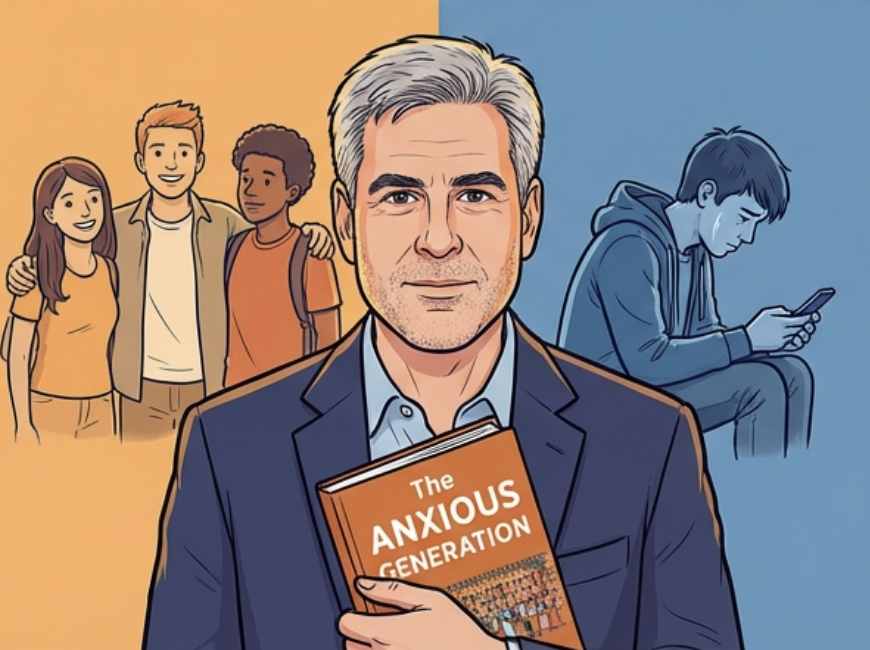
Jonathan Haidt (USA). A social psychologist and Professor of Ethical Leadership at NYU Stern. The definitive voice on The Anxious Generation, Haidt provides the data proving how the smartphone era has rewired childhood—fueling a global mental health crisis and turning youth development into an extractive industry.
The new parenting rival isn’t the schoolyard bully or the questionable friend. It’s the algorithm—an entity with infinite patience, perfect memory, and a business incentive to bypass a child’s developing frontal lobe.
Countries are beginning to respond. Australia recently enforced a law banning social media for children under 16, offering the world a rare example of political courage against trillion-dollar forces. Whether this hardline initiative will work remains to be seen, as kids in Australia have reacted strongly against it.
When Algorithms Shape Our Society
Zeynep Tufekci delivered perhaps the most unsettling insight of all: algorithms don’t just show us content—they reorganize society itself.
Her research reveals how recommendation systems push people toward emotional extremes, escalate polarization, and reward outrage because outrage keeps us online. In her words, platforms have become “the architects of public life,” steering collective behavior long before we’re aware it’s happening.
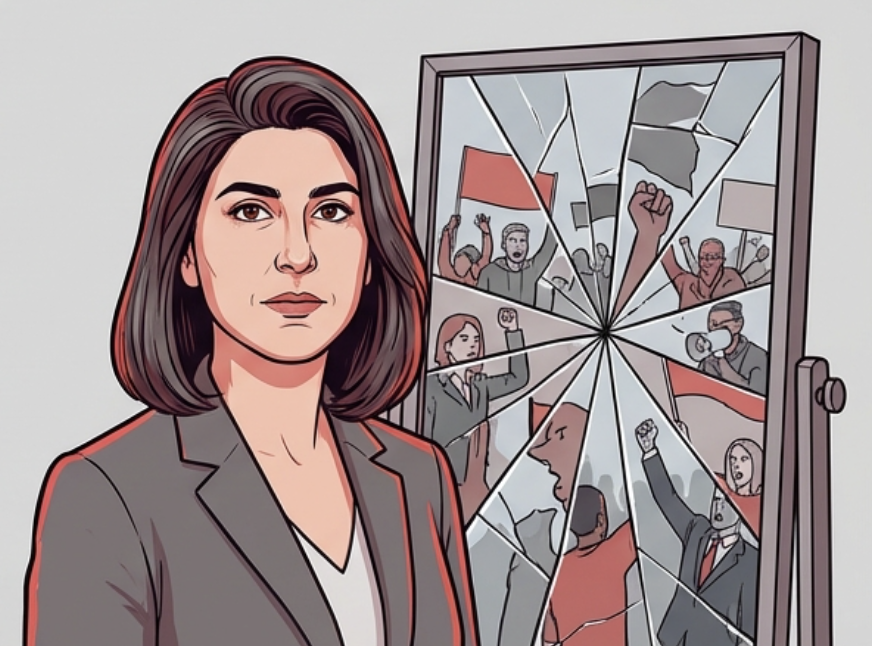
Zeynep Tufekci (Turkey / USA). A sociologist and the Henry G. Bryant Professor at Princeton University. As a New York Times columnist, she is the world’s leading “techno-sociologist,” mapping how algorithms don’t just suggest content—they reorganize society, fuel polarization, and reward our darkest impulses.
The Era of AI
We’ve entered a new chapter—one where artificial intelligence doesn’t just predict our behavior; it shapes it in real time.
AI can now:
-
generate content tailored to your psychological profile
-
anticipate what will keep you scrolling
-
personalize outrage, fear, validation, and distraction
-
learn your triggers faster than you learn your boundaries
-
reinforce beliefs before you’ve even examined them
The question isn’t whether AI will influence you. The question is whether it will influence you intentionally (where you decide how) or accidentally (where you don't).
If social media hijacked our attention, AI—left unchecked—will hijack our agency.
THE RECKONING
Four Thinkers. One Urgent Message.
Separately, they found the glitches. Together, they revealed a system. If Brignull found the trap and Harris found the hook, Tufekci found the fallout—and Haidt found the victims. Spryng is serves to spread their messages.
Their collective insight is simple: Awareness is no longer a luxury; it is the first act of rebellion.
We are living through a “system installation” that was never authorized by our judgment or our values. Once you see the invisible grammar of the digital world—the dark patterns, the dopamine loops, and the algorithmic outrage—the system begins to lose its power over you.
The Collective Roadmap
-
From Harry Brignull: Learn to spot dark patterns so you stop being a passenger in your own decision-making.
-
From Tristan Harris: Recognize that your “lack of willpower” is actually a response to a trillion-dollar supercomputer aimed at your brain.
-
From Zeynep Tufekci: Understand that your “personal” feed is a social architect; choose sources that value truth over outrage.
-
From Jonathan Haidt: Treat childhood as sacred ground—not an extractive industry for tech companies.
The war for human attention has begun.
It’s time to pick a side.
Learn More
-
The Teen Social Media Ban. Protection or Overreach? – A Spryng post about the recent social media ban in Australia.
-
Deceptive.design – An extensive archive of the manipulative tactics companies use to trick you.
-
Twitter and Tear Gas – A riveting firsthand account and analysis of internet-fueled protest movements.
-
Center for Humane Technology – Resources for parents, educators, and technologists moving beyond the attention economy.
-
AnxiousGeneration.com – A research-backed guide for reclaiming childhood from the phone-based era.
-
The Social Dilemma (Netflix) – The definitive documentary on how social media is programmed to shape what we think—and who we become.