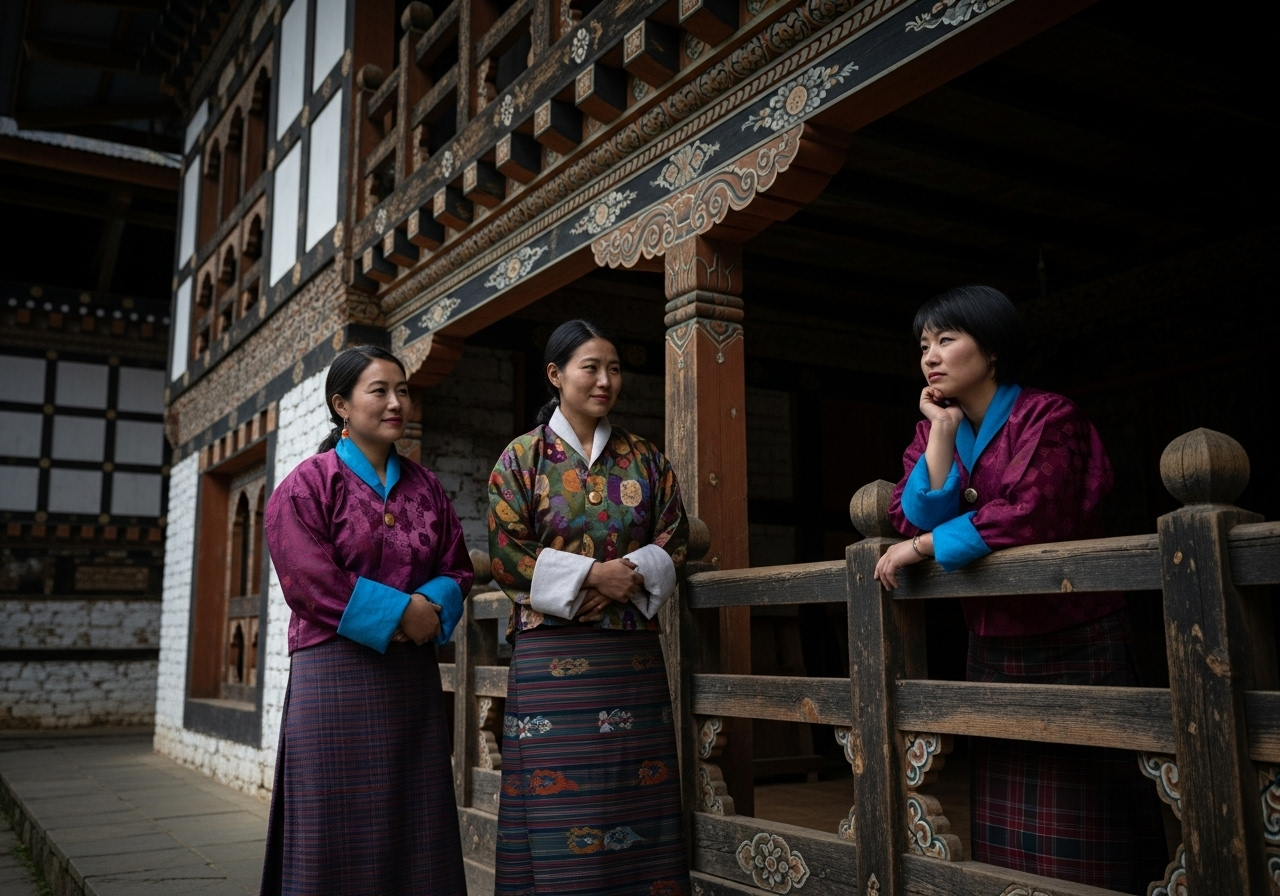

Step into Bhutan, and one of the first things you'll notice isn’t just the pristine mountains or peaceful monasteries—it’s what people wear.
Across valleys and city streets, the gho and kira aren't just traditions—they're a living symbol of unity in a country rich in diversity. In a world rushing toward sameness, Bhutan proudly wears its difference.
The gho (for men) and kira (for women) are Bhutan’s national dress, worn in schools, government offices, and during cultural events. But their purpose runs deeper. These garments stitch together generations, regions, and beliefs, acting as a shared thread between highland and lowland, east and west.
And here’s a fun twist—did you know the gho features what’s considered one of the largest pockets in the world? Tucked neatly around the waist, this pouch-like fold isn’t just part of the design; it’s where Bhutanese men carry everything from phones and wallets to books and even laptops, blending cultural pride with everyday practicality.
They represent national pride, discipline, and respect—worn not just for formality, but for what they mean.
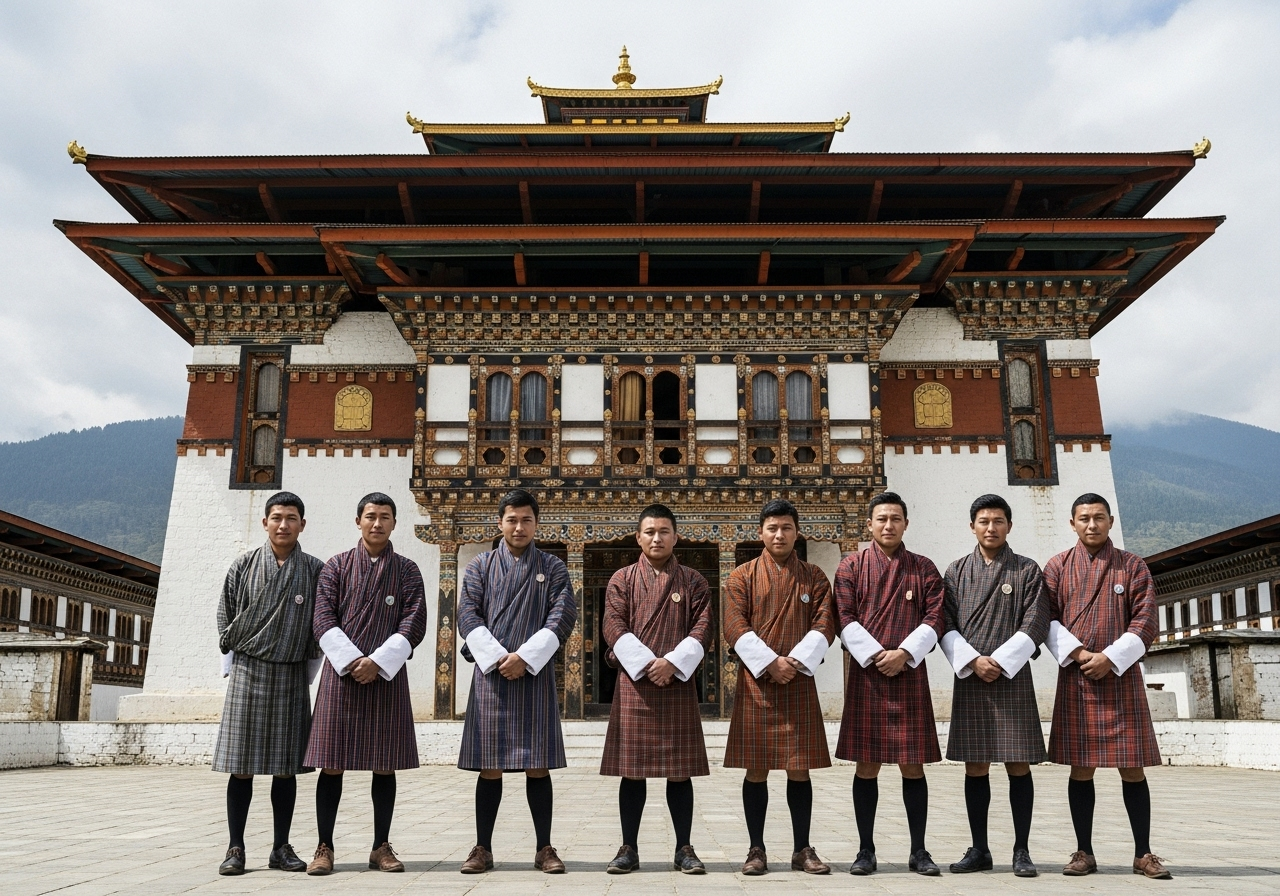
Men dressed in the traditional gho, showcasing the uniformity and cultural pride it represents.
How They're Worn: Dress with Meaning
Each part of the dress has significance:
- Men’s Gho: A knee-length robe, paired with a tego (inner jacket) and the kabney, a ceremonial scarf whose color shows social status.
- Women’s Kira: An ankle-length wrap-around dress worn with a wonju (blouse), tego (jacket), and the rachu, a scarf that reflects grace and dignity.
Every fold, tie, and drape has meaning. It’s like wearing your values.
Whether you’re from a Lhotshampa community in the south or a farmer in central Bhutan, wearing the national dress signals one thing: we are Bhutanese.
In a country with multiple ethnic groups, languages, and traditions, this shared attire becomes a gentle daily reminder of oneness.
Quick quiz:
In Bhutan, what do the colors of the kabney (ceremonial scarf) worn with the gho signify?
In rural villages, traditional dress is part of everyday life—practical, durable, and deeply tied to culture and religious rituals. In urban centers, where Western fashion is growing, the gho and kira still hold strong during work hours, cultural functions, and national events. For many young Bhutanese, they now represent both identity and resistance against losing their roots.
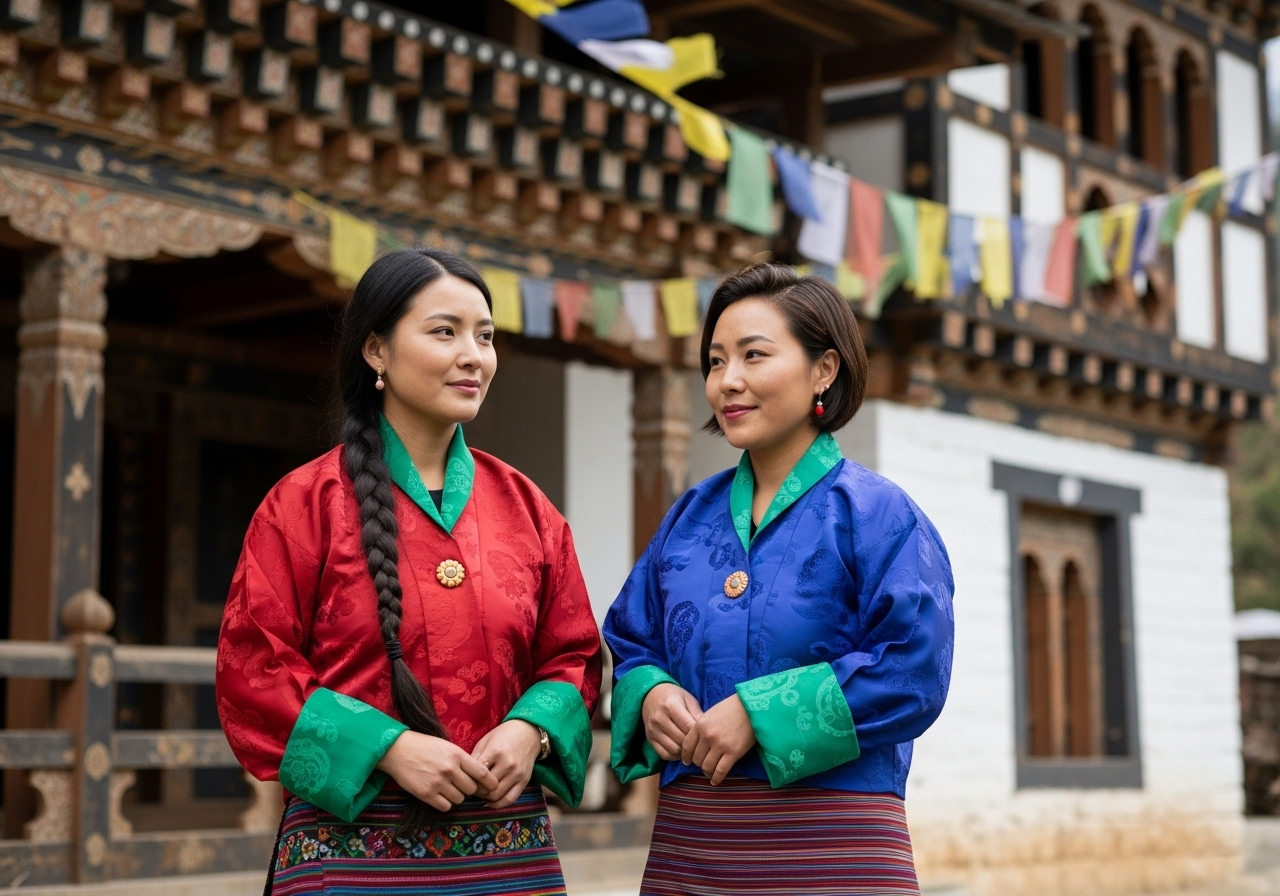
To wear the national dress isn’t just about tradition—it’s about values.
The act of putting it on shows respect for the country and king and awareness of social etiquette. It’s like saying, “I honor where I come from, and the people I stand with.”
Let’s be real—some youth today feel the dress is too time-consuming, or not “cool” enough. Global fashion and social media have started pulling attention away. But Bhutan isn’t giving up.
Fashion shows, school programs, and even influencers now play a part in keeping the dress relevant, not rigid. New patterns, modern fits, and vibrant takes are emerging—breathing fresh life into age-old threads.
If you have a national dress how often do you wear it in a year?
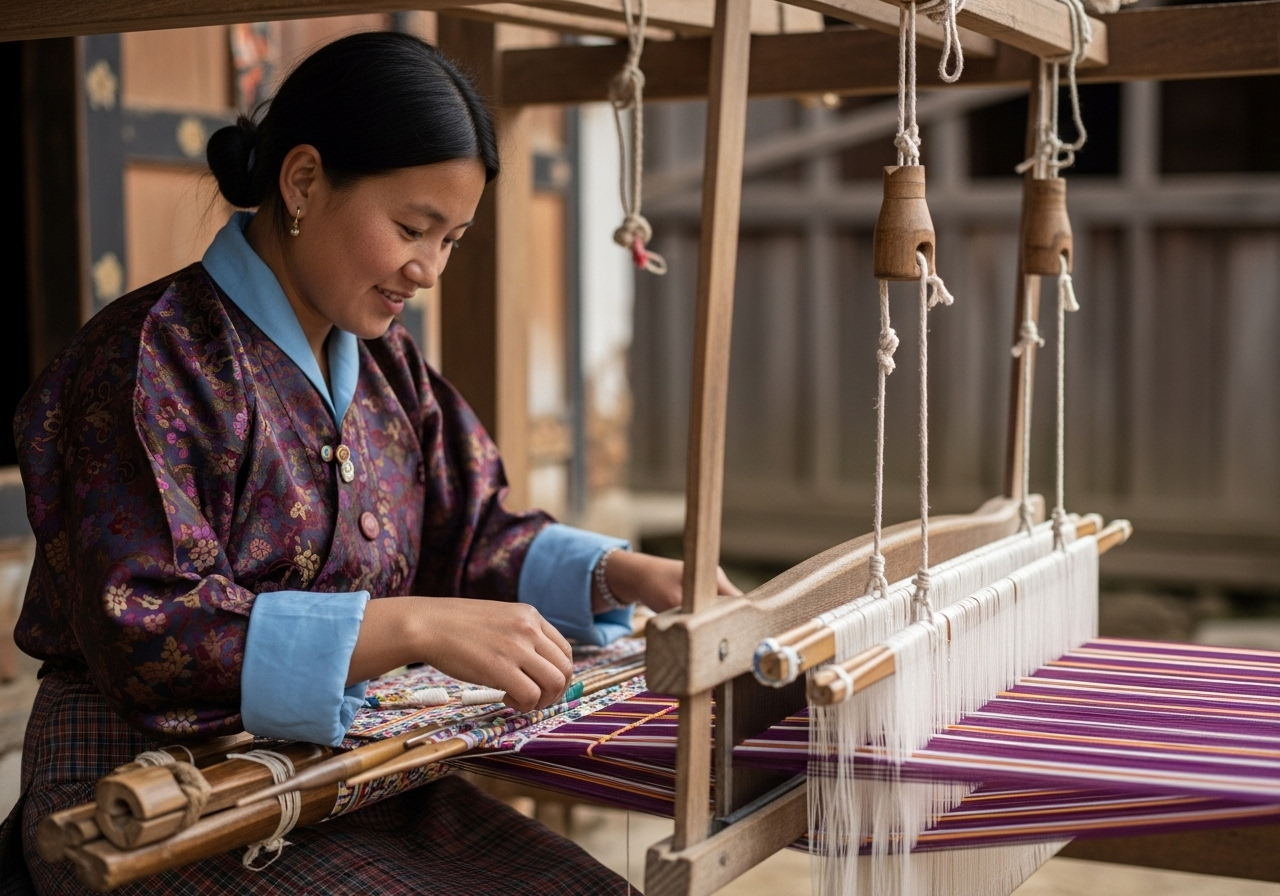
The intricate process of weaving a kira, preserving a vital part of Bhutanese cultural heritage.
Beyond symbolism, the national dress fuels an entire economy of weavers, artisans, and small businesses. Handwoven kira pieces, some taking months to make, are passed down like heirlooms. Supporting the national dress means supporting Bhutanese women, rural crafts, and generational art.
At its heart, the gho and kira aren’t about rules or resistance—they’re about pride and remembrance. Of who we are. Where we’ve come from. And where we’re going, together.
In an ever-modernizing Bhutan, the national dress remains a gentle but firm reminder: we can move forward without leaving our roots behind.
References: