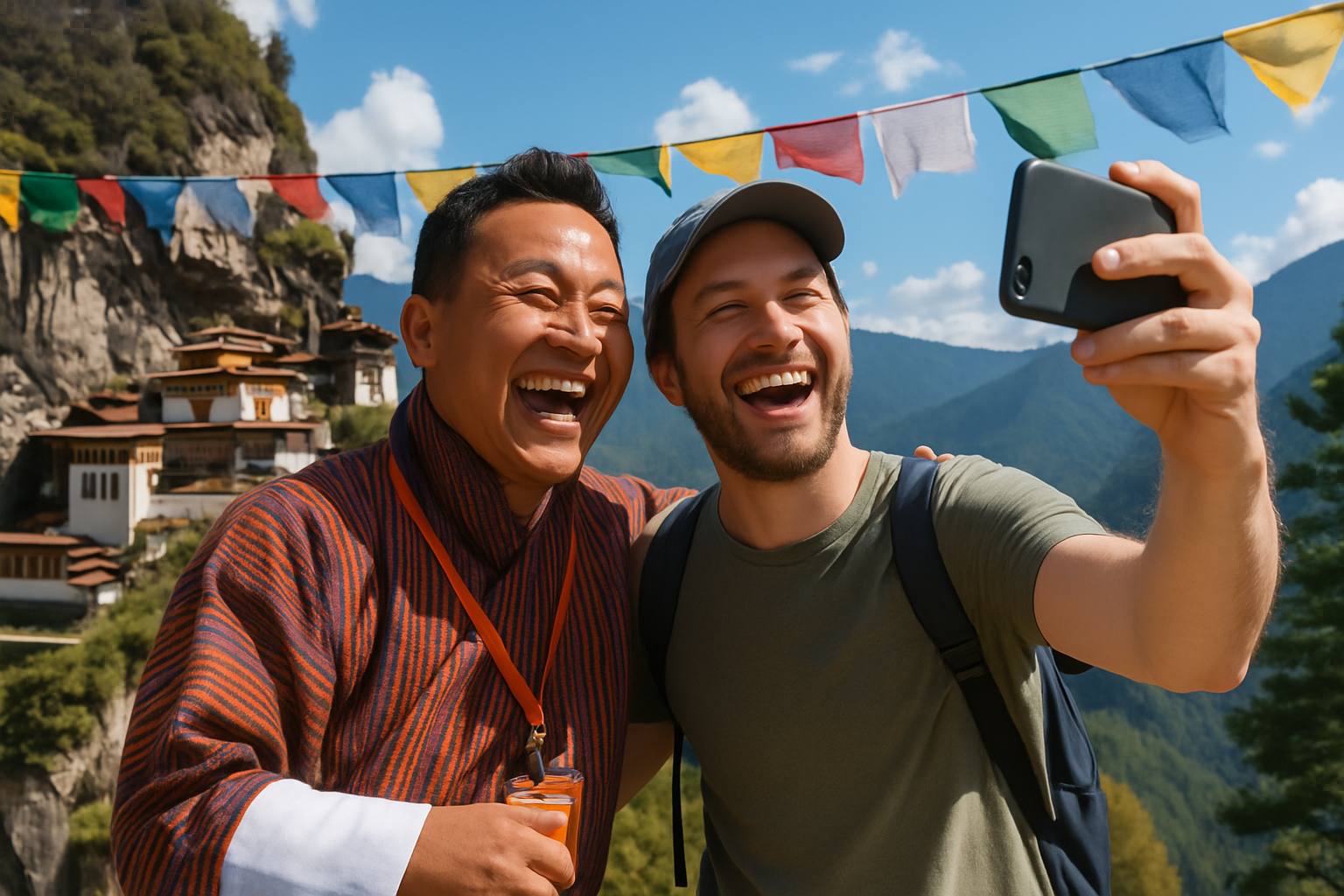

From ancient monasteries perched on cliffs to village homes steeped in tradition, Bhutan offers more than breathtaking views—it invites you into a way of life rooted in mindfulness and respect. But to truly experience the heart of this Himalayan kingdom, you’ll need more than just a camera and a sense of adventure. Understanding local customs—from how you greet someone to how you share a meal—is key to forging genuine connections and honoring the spirit of Gross National Happiness. This guide will walk you through essential etiquette that turns your trip into something deeper: a respectful and enriching cultural exchange.
General Etiquette and Customs
Beyond religious sites, understanding general Bhutanese customs will enhance your interactions with the local people.
- Greetings: The traditional Bhutanese greeting is a bow of the head accompanied by the word "Kuzu Zangpo La" (meaning "good body, speech, and mind"). While a handshake is generally acceptable with foreigners, be mindful of the other person's preference.
- Gift Giving: If you are invited to someone's home, it is customary to bring a small gift. Suitable gifts include fruits, sweets, or imported items that may not be readily available in Bhutan. Present the gift with both hands.
- Eating and Drinking: When offered food or drink, accept it with both hands. It is polite to take a small portion first and ask for more if desired. Avoid wasting food. Before sharing a meal, Bhutanese families often perform a brief prayer ceremony as an offering to the divine. As a guest, participating in this sacred moment is both respectful and deeply appreciated.
- Pointing: Avoid pointing with a single finger, as it is considered impolite in Bhutanese culture. This gesture can come across as aggressive or disrespectful. Instead, use an open hand.
- Public Displays of Affection: In Bhutanese culture, overt displays of affection—such as kissing or hugging in public—are generally frowned upon. Such behavior is considered inappropriate and may cause discomfort or embarrassment in a society that values modesty and social decorum.
- Photography: Always ask for permission before taking someone's photograph.
- Tipping: Tipping is not customary in Bhutan, as service is generally offered with sincerity and pride. However, if you receive exceptional service—particularly in smaller guesthouses or from guides and drivers—a modest tip is appreciated as a gesture of gratitude. While not expected, it is seen as a kind acknowledgment of personal care and effort..
- Dressing in Bhutan: While a variety of clothing styles are acceptable, visitors are expected to dress modestly, especially in public places and sacred sites. Attire that exposes sensitive areas—such as short shorts, low-cut tops,—is discouraged, as it may be considered disrespectful in Bhutanese society, which values modesty and decorum.
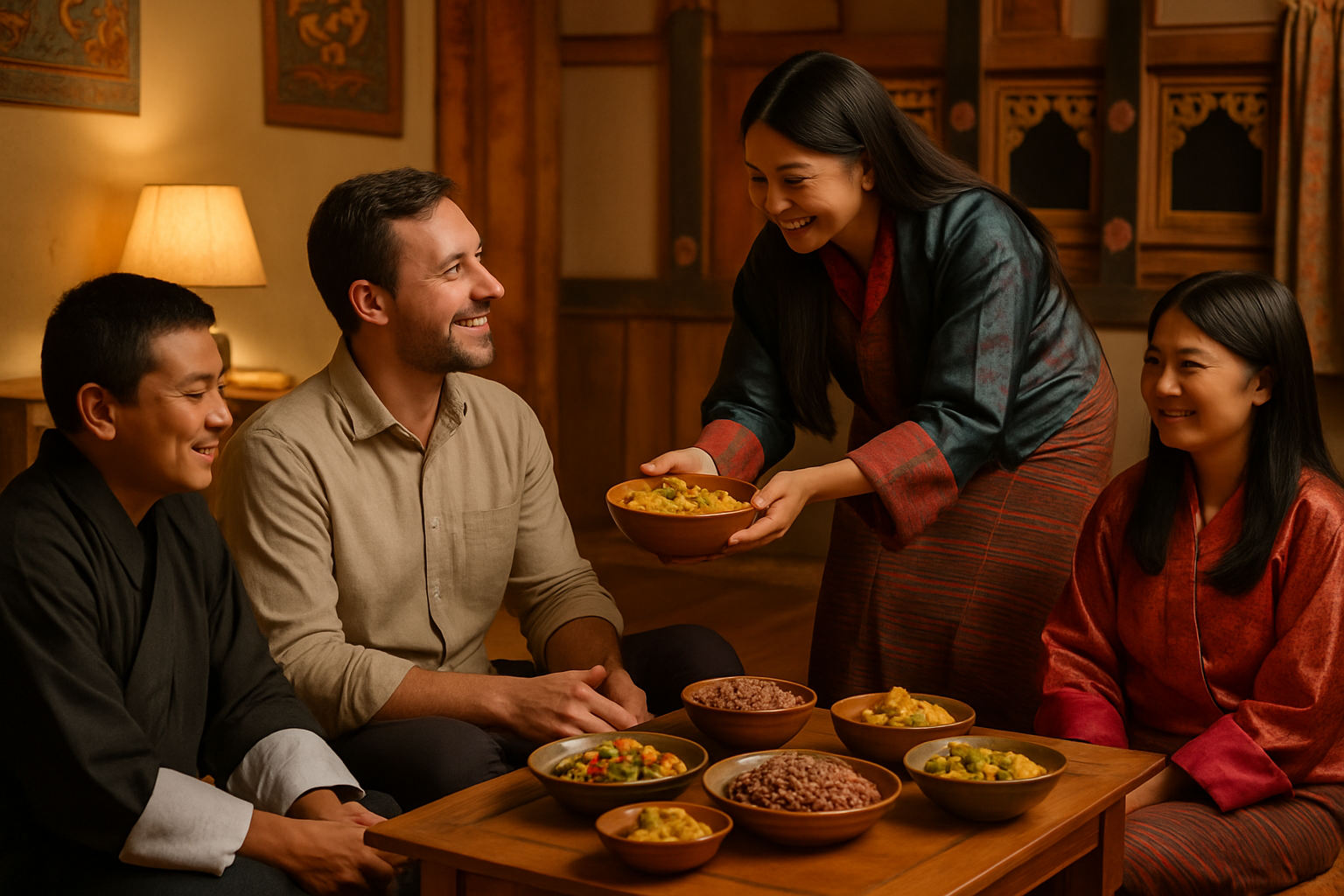
Sharing a meal is an important part of Bhutanese culture. Always accept offerings with both hands.
Which Bhutanese custom would be most interesting for you to adapt to during your visit?
Sustainable and Responsible Travel
Respect extends beyond cultural practices to encompass environmental responsibility. Bhutan is a leader in sustainable tourism, and visitors are encouraged to support these efforts.
- Minimize Waste: Avoid using single-use plastics and dispose of waste responsibly.
- Conserve Resources: Be mindful of water and energy consumption.
- Support Local Businesses: Choose locally owned hotels, restaurants, and shops to support the Bhutanese economy.
- Respect Wildlife: Observe wildlife from a distance and avoid disturbing their habitat.
- Trekking Etiquette: If trekking, stay on marked trails, avoid littering, and respect the natural environment.
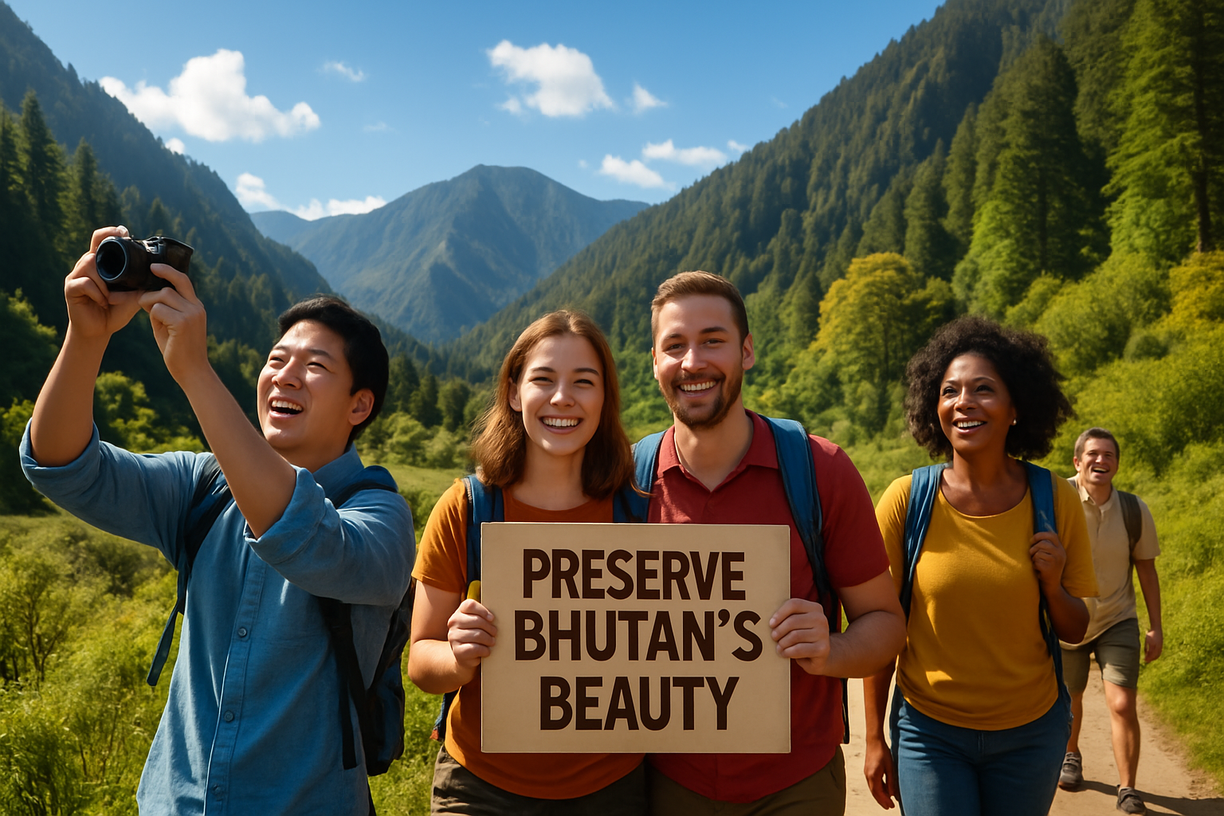
Explore with care, leave only gratitude—preserve Bhutan’s beauty.
Language
While English is widely spoken in tourist areas, learning a few basic phrases in Dzongkha, the national language, will be greatly appreciated.
"Kuzu Zangpo La": Hello!
"La": A polite suffix used when speaking to someone of respect
"Kadinchey La": Thank you
After reading this guide, which aspect of responsible travel in Bhutan are you most inspired to practice?
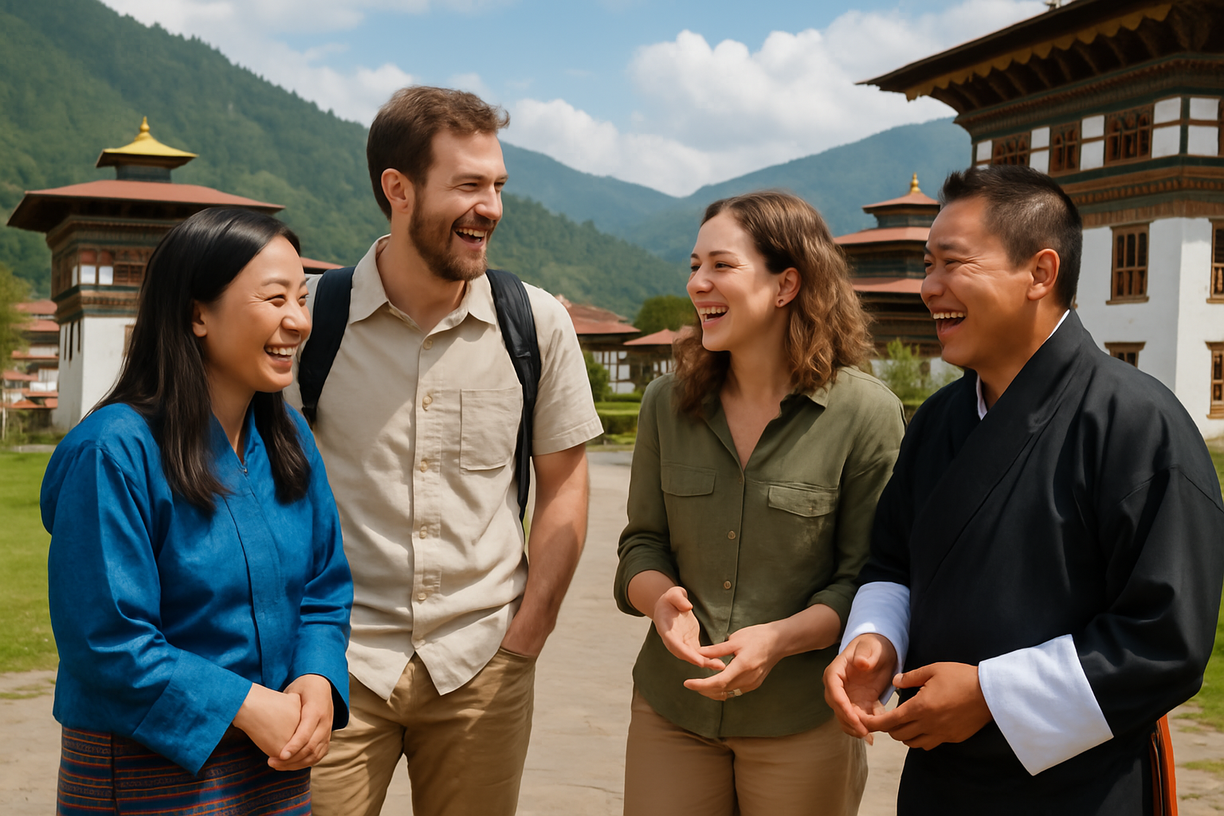
Laughter is the universal language—connecting hearts in the Land of Happiness
By understanding and practicing these simple guidelines, you can ensure a meaningful and respectful journey through Bhutan. Embrace the opportunity to learn from the Bhutanese people, appreciate their rich culture, and contribute to the preservation of their unique way of life. Your mindful approach will not only enrich your own experience but also leave a positive legacy for future travelers.