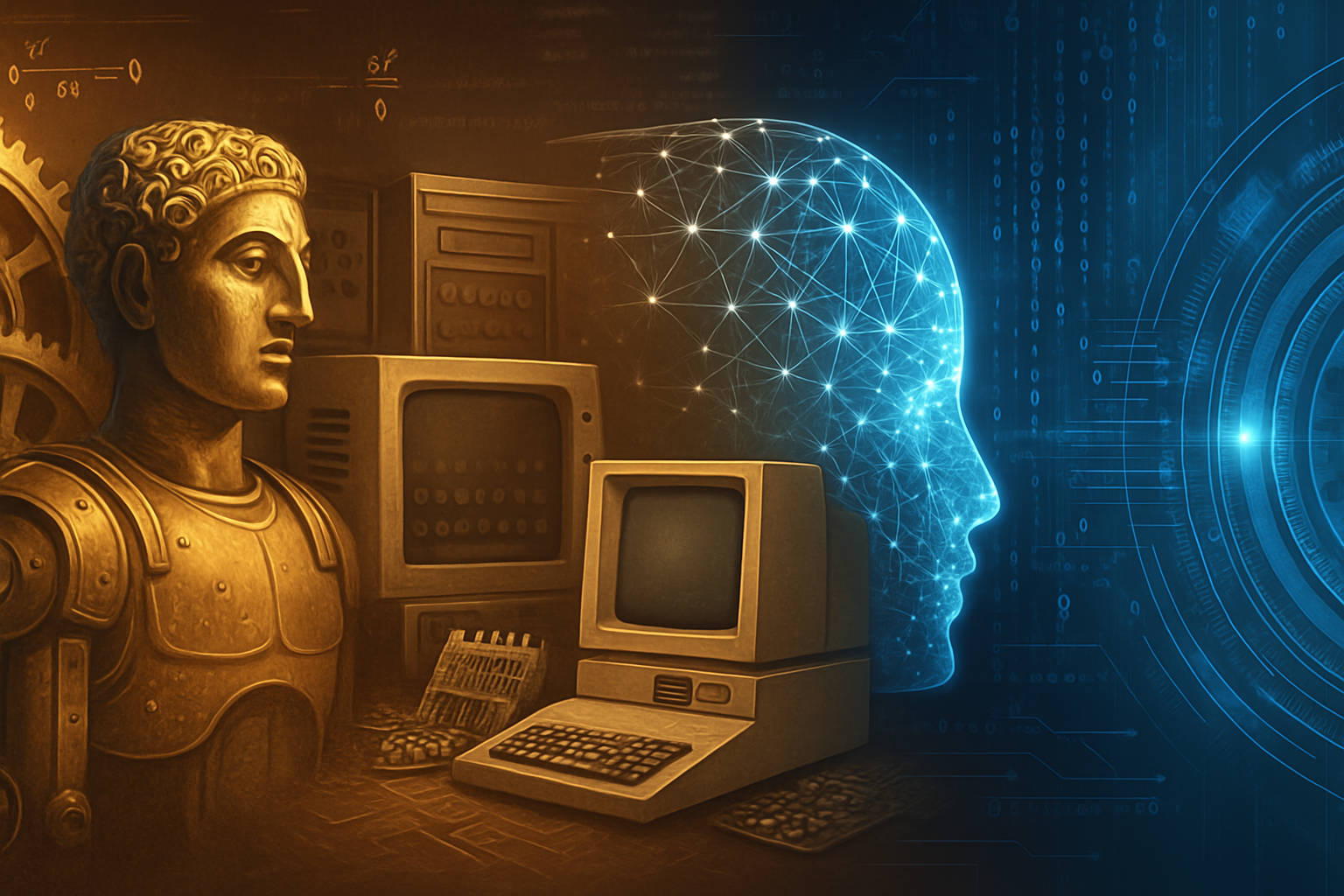

Imagine machines that can think, learn, and even create. That’s our reality today, but how did we get here? The story of artificial intelligence is one of brilliant minds, surprising setbacks, and breakthroughs that shaped the present.
This post offers a clear view of AI’s journey from its earliest imaginings to its present breakthroughs — and equips you to navigate a world where AI announcements are constant and not always what they seem. While we can’t predict exactly what lies ahead, we do know that rapid change is inevitable. By looking back at the facts of history, we gain valuable perspective for the road that lies ahead.
One of Spring’s co-founders, Donald Tanguay, PhD, has been at the forefront of AI innovation — from his early work at Stanford to his contributions at Google. Building on this legacy, Spring remains grounded in cutting-edge AI while keeping human values at its core. Our mission is to help shape the positive evolution of AI and play a meaningful role in writing its next chapter.
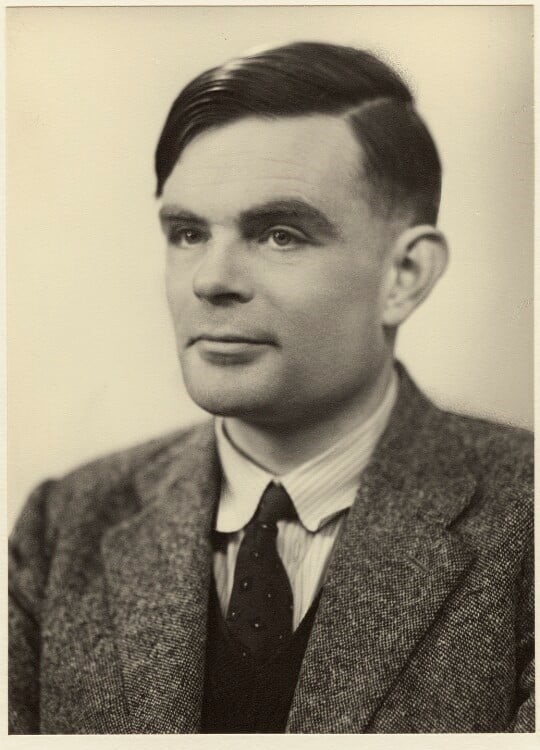
Alan Turing (1912–1954), the father of computer science and artificial intelligence
Introduction
From myths of mechanical servants to today’s AI chatbots, humans have long dreamed of machines with intelligence. This guide explores key milestones—from ancient automatons to modern generative AI—and revisits the famous Turing Test, which still sparks debate today.
How confident are you in your ability to navigate the latest AI tools?
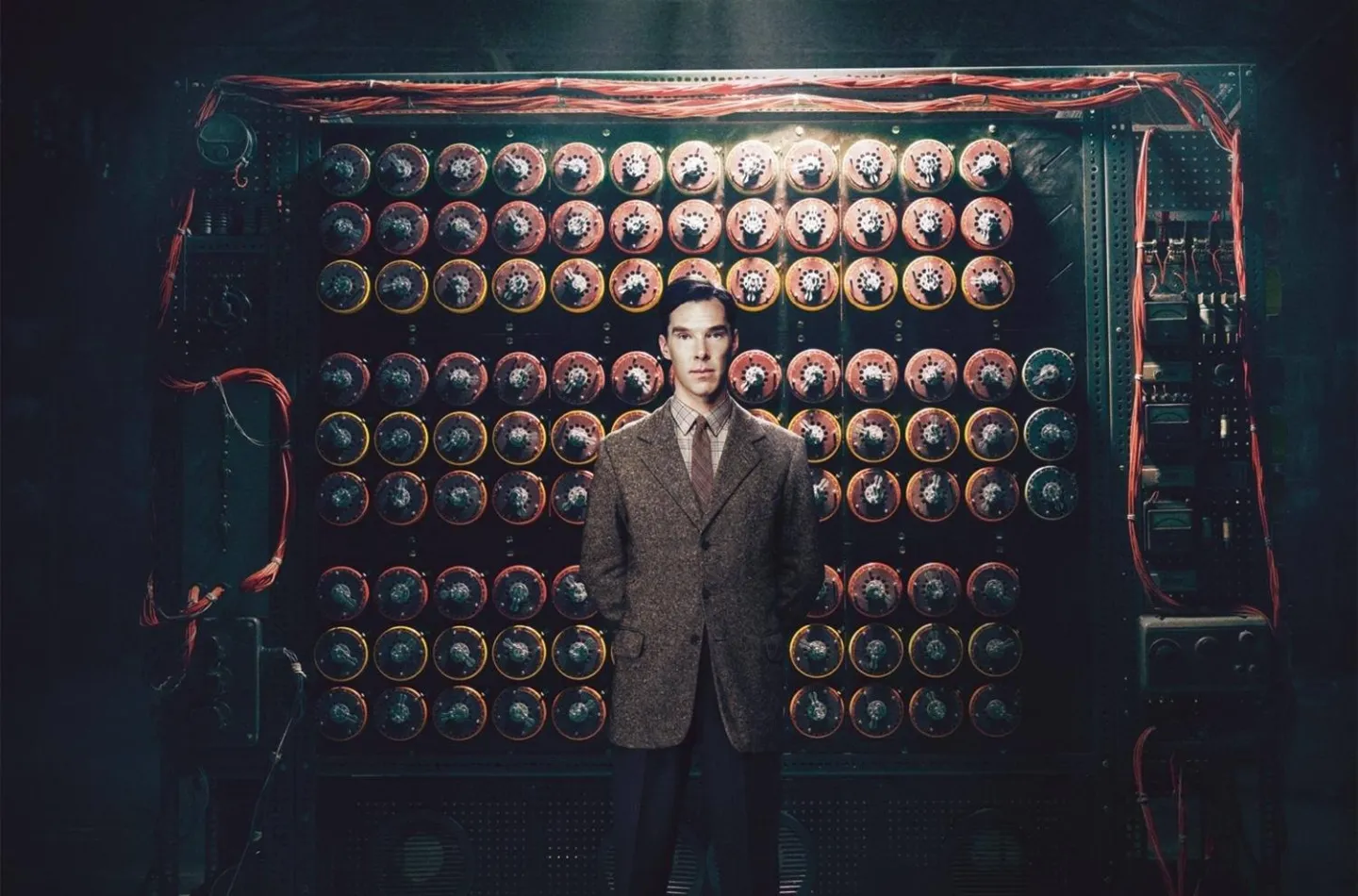
The Imitation Game: A movie about Alan Turing, the founding father of computer science credited with drastically shortening World War II because he cracked the Nazi Enigma code at Bletchley Park.
Ancient Roots: Dreams of Intelligent Machines
Humans have envisioned artificial beings for millennia. Greek myths describe Hephaestus crafting golden servants and Talos, the bronze giant who guarded Crete. Aristotle investigated logic as a process, laying an early foundation for reasoning.
By the 9th century, polymaths like Ismail Al-Jazari were already building programmable machines such as water clocks and robotic musicians. In the 17th century, Descartes and Leibniz argued that reasoning followed formal principles, and Pascal constructed one of the first mechanical calculators, the Pascaline. These advances foreshadowed the automation of logical thought.
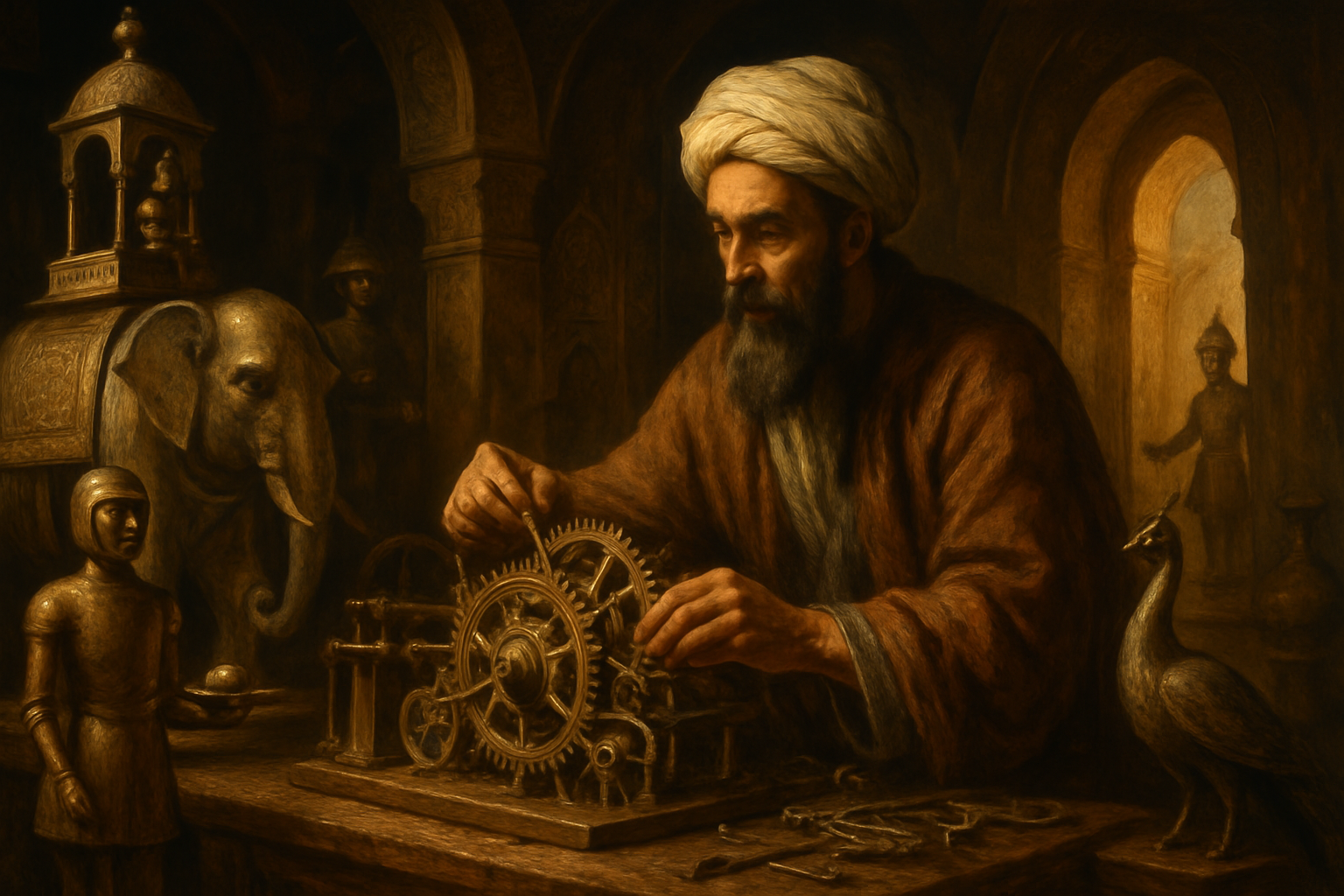
A depiction of what Ismail al-Jazari might have looked like working on one of his many inventions.
1800s–1940s: Theoretical Foundations
George Boole’s Laws of Thought (1854) introduced Boolean algebra, reducing logical reasoning to binary decisions. Alan Turing’s 1936 paper on computable numbers formalized the concept of algorithmic machines, laying the groundwork for computers. Turing’s code-breaking work at Bletchley Park during World War II showed how rigorous logic could solve complex real-world problems.
By 1943, McCulloch and Pitts had demonstrated that artificial neurons could implement logic. With ENIAC (1946), one of the first programmable computers, this theory became practice — proving machines could tackle logical and mathematical tasks faster than humans.
How much of the Theoretical Foundations made sense to you?
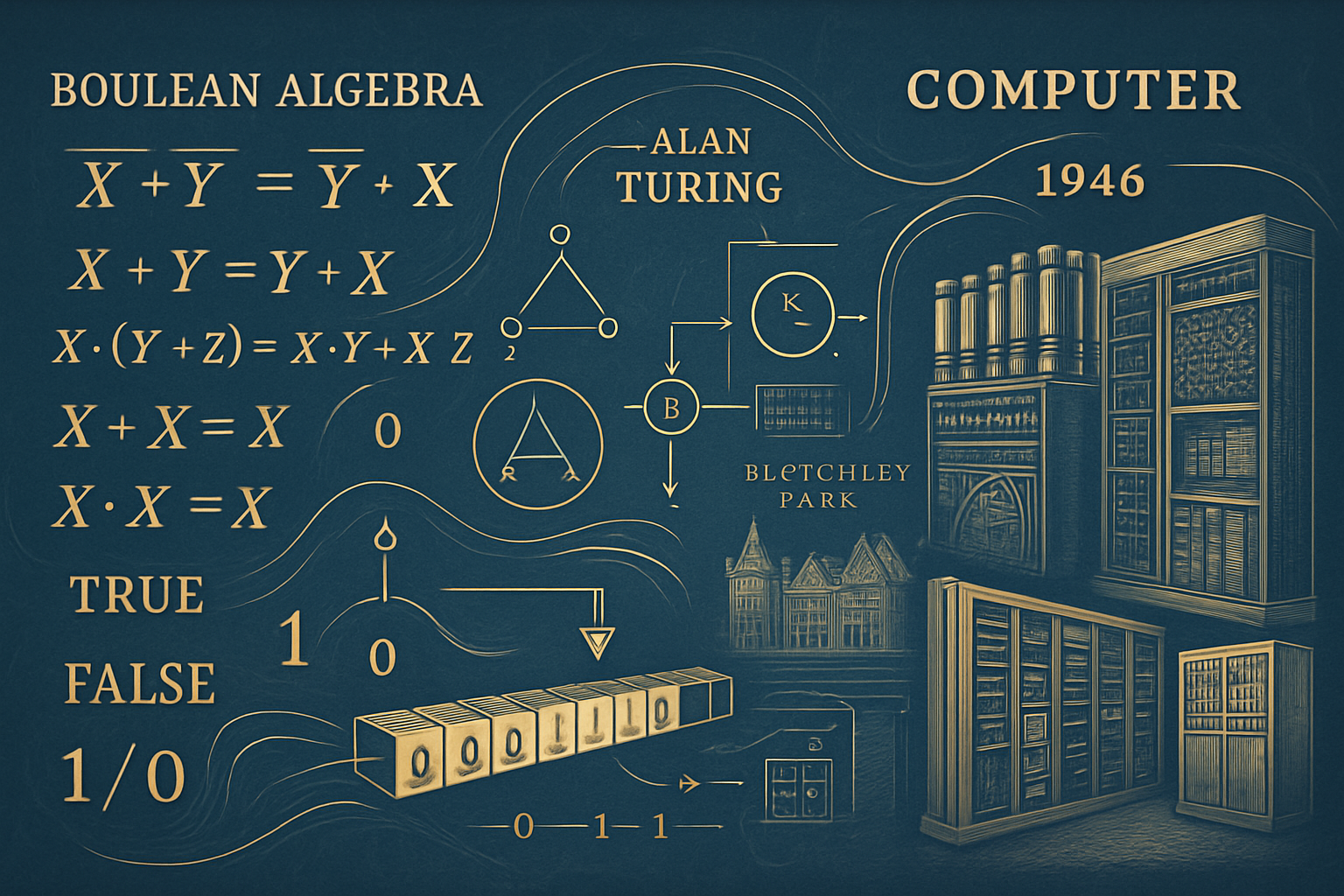
1950s–1960s: AI as a Field Emerges
In 1950, Turing introduced his famous Turing Test — a thought experiment to gauge machine intelligence by comparing its conversational abilities to a human's. The Dartmouth Conference of 1956, led by John McCarthy, officially gave the field its name: Artificial Intelligence. Early programs like Logic Theorist and GPS showed that machines could solve formal problems, and John McCarthy invented LISP to make writing AI software easier.
By 1966, Joseph Weizenbaum created ELIZA, one of the first chatbots, which simulated therapy sessions. Many users attributed deep understanding to this simple pattern-matching program — a phenomenon that would become known as the “ELIZA effect,” showing how quickly people ascribe intelligence to machines that only mimic it.
1970s–1990s: The AI Winters
Despite early progress, AI faced serious challenges. Marvin Minsky and Seymour Papert's 1969 book Perceptrons revealed that single-layer neural networks were fundamentally limited. This led many researchers to wrongly conclude that all neural networks were a dead end — delaying progress in the field for over a decade.
By the mid-1970s, the UK’s Lighthill Report highlighted AI’s struggles to scale to real-world problems, and DARPA pulled significant funding. Combined with the collapse of LISP machines and expert systems in the 1980s, this triggered two long AI winters, when overhyped promises weren’t matched by practical results.
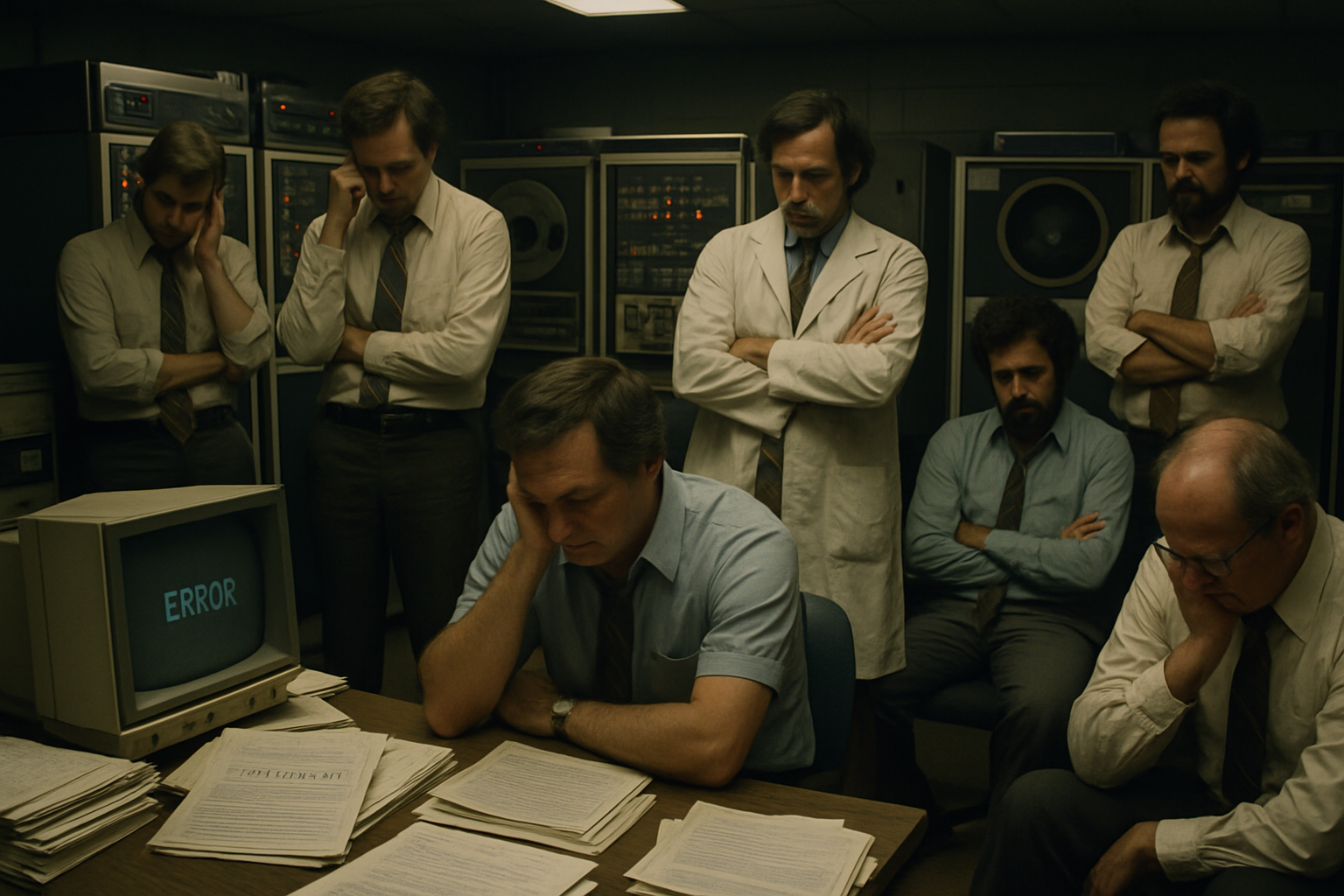
This is what Spring’s editorial team produced when asking for an image depicting the AI Winters. Created by Manus AI
1990s–2000s: Machine Learning Breaks Through
In the 1990s, new algorithms like Support Vector Machines and Random Forests revived interest in AI. IBM’s Deep Blue defeated world chess champion Garry Kasparov in 1997, proving machines could outperform humans at complex games — not by mimicking human thinking, but by brute force search.
Meanwhile, researchers like Yann LeCun pioneered convolutional neural networks (CNNs) for image recognition. However, these advances had limited impact at first due to insufficient data and computing power.
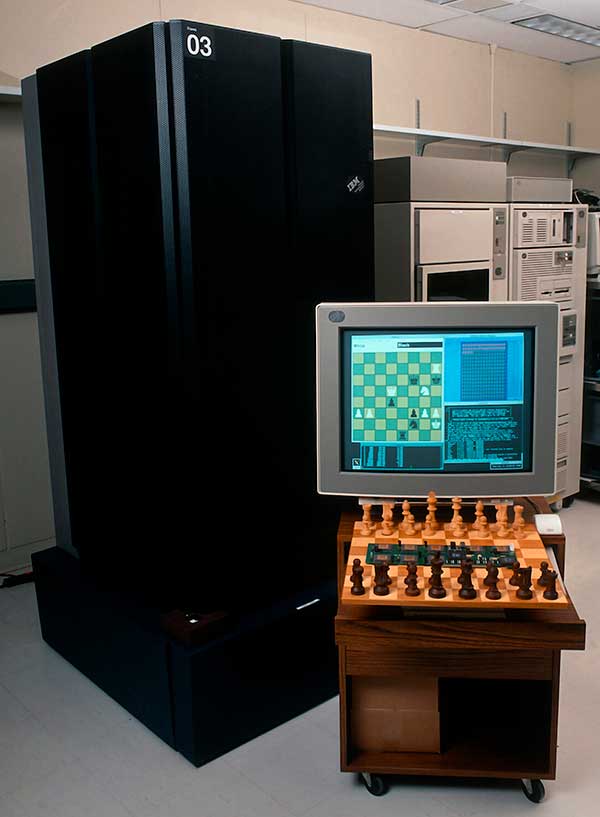
IBM’s Deep Blue that defeated Gary Kasparov
2010s–Present: Deep Learning and Generative AI
The big breakthroughs began in 2012 when AlexNet crushed its competitors in image recognition using deep CNNs, leveraging GPUs and massive datasets. Then came AlphaGo’s 2016 victory against Go champion Lee Sedol — a feat thought impossible because Go is vastly more complex than chess. Its creative and unpredictable style, combining deep networks with search algorithms, inspired a new wave of AI research.
Around 2020, AI moved into mainstream conversation with large language models like OpenAI’s GPT-3. ChatGPT followed in 2022 and captivated millions, answering questions, writing essays, and composing poetry. Tools like Midjourney and DALL·E could generate original art and video from text descriptions, pushing AI into new creative domains.
Most people have tried Chat GPT and a few more tools. How many tools have you tried so far?
There are literally thousands of AI tolls available on the web and on your smartphone
Conclusion: From Dreams to Reality
The path to modern AI has been long, with myths, breakthroughs, winters, and renaissances. Despite all progress, machines still lack true general intelligence or an understanding of what they generate. Many outputs that seem insightful can conceal shallow reasoning or errors that would not fool a human. But by learning from past missteps and investing in careful, responsible research, we inch closer to creating machines that support, enhance, and enrich human life.
And as this story continues to unfold, we must remember the lessons of history — balancing ambition with realism and innovation with ethics — to ensure that AI benefits everyone.
With a few keywords, what is your general outlook of the world of AI?
This post wouldn’t be complete without an interactive AI element. Generate your own unique mini-action plan based on your answers throughout the post.
When you're ready, evaluate your responses: