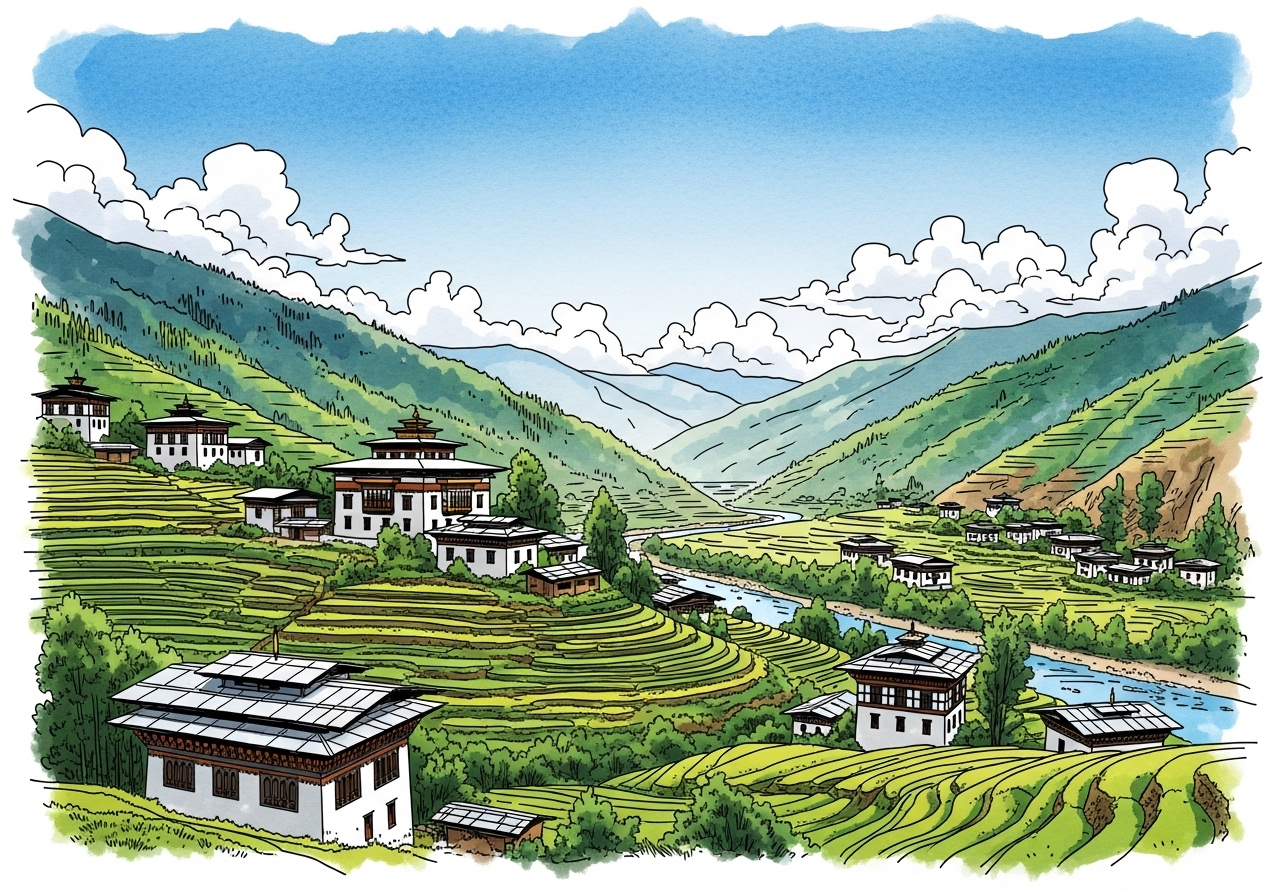

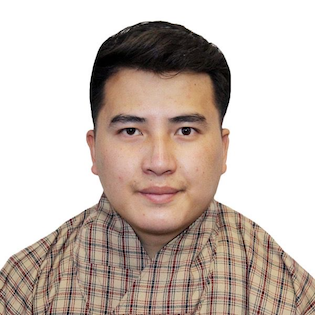
Sangay Jamtsho is the Bhutan Editor at Spring, where he focuses on Bhutanese life, culture, business, and the intersection of the old and the new. From Pemagatshel, Bhutan, Sangay studied Environmental Management at Royal Thimphu College. He has worked with the Samdrupjongkhar Initiative and the Bhutan Youth Development Fund, focusing on youth empowerment, sustainability, and community development.
I still remember the smell of firewood in the early morning, the sound of cowbells echoing through our fields, and the unmistakable crow of a rooster breaking the silence just before dawn. That was my alarm clock growing up—not a phone, not a calendar full of meetings. Back then, the world felt wider, slower, and somehow more alive.
Who wouldn’t want a calm life—one where the day unfolds gently, where time is measured not by deadlines but by daylight, and where the air you breathe actually feels like a gift, not a transaction? Sometimes I think we’ve complicated what it means to live well. Not everyone dreams of luxury condos, Teslas, or the newest café on the block. Some of us still long for a place where the sky feels bigger, the land familiar, and where no one is in a rush to outpace themselves.
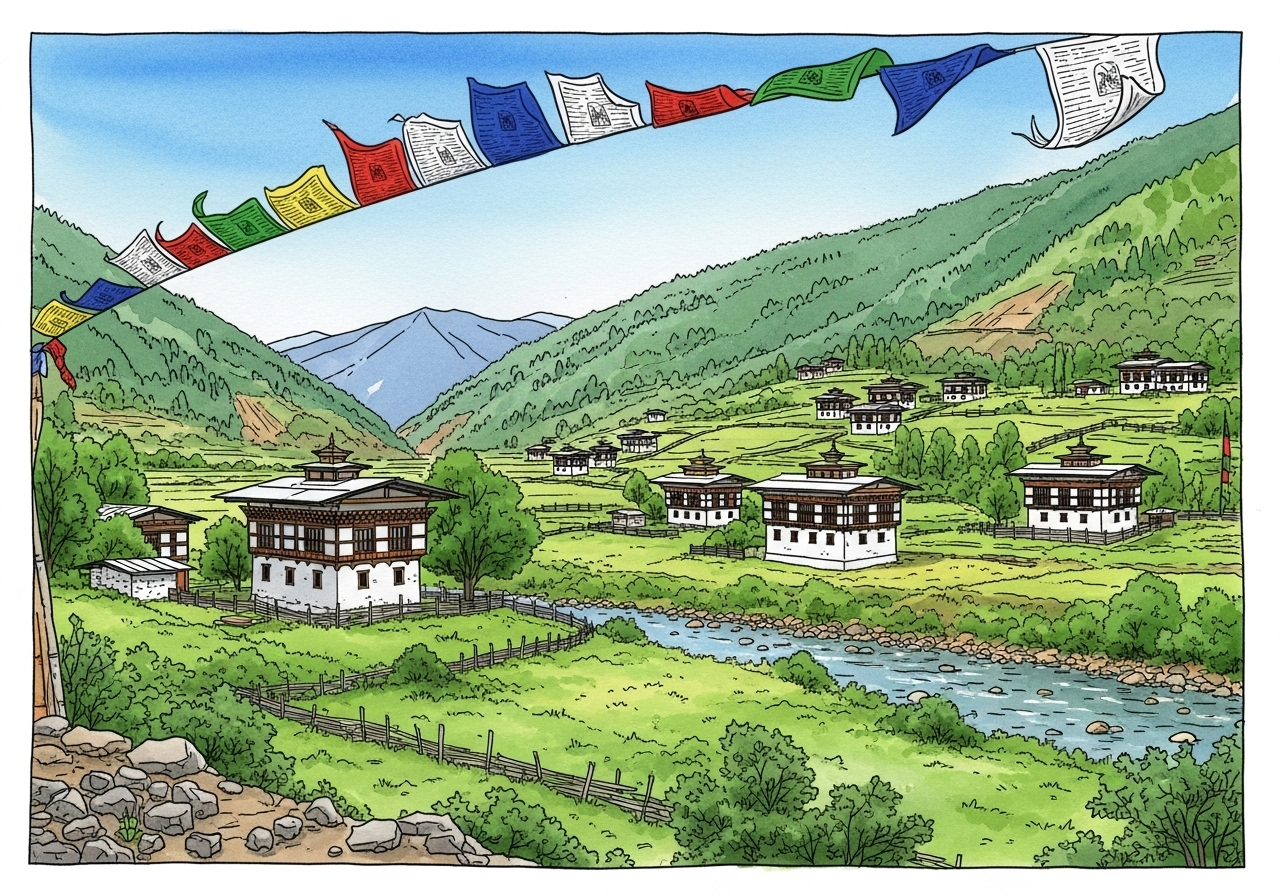
Life in rural Bhutan revolves around the land, with agriculture at the heart of daily life.
I grew up in such a place. A village where people still believe in showing up for one another. Where neighbors are more than just people next door—they’re your safety net, your co-workers in the fields, your extended family in spirit if not in name. We didn’t have much, but we had enough. Enough food, enough peace, enough meaning. You grew your vegetables, you exchanged goods through barter, you asked for help and gave it in return. Even today, in small rural corners of Bhutan, that life still exists. You can still find people gathering to raise prayer flags, walking home together from the fields, offering blessings instead of opinions. There, happiness isn't posted on social media. It’s lived.
Then I moved to the city.
On paper, it made sense—better opportunities, better schools, better pay. Thimphu has what the village lacks: infrastructure, choices, speed. But behind the convenience lies something harder to name. I’ve lived in the same apartment building for over a year, and I don’t know the names of my neighbors. We walk past each other like polite ghosts, occasionally nodding, never really seeing. Everyone is busy. Everyone is tired. And somewhere in all this, we’ve stopped looking up from our screens long enough to notice we’ve built lives that often feel hollow.
I question the food I eat—imported vegetables that look perfect but taste of nothing, sprayed and packaged and sold with a markup. The old certainty of pulling a radish from your own backyard, still coated with earth, feels like a distant memory. In the city, even using a public restroom can come with a fee. Money touches everything. Without it, you’re not just poor—you’re invisible. In the village, wealth isn’t measured in numbers. It’s in how many people come to visit when you’re sick, how many hands show up to help when there’s work to be done.
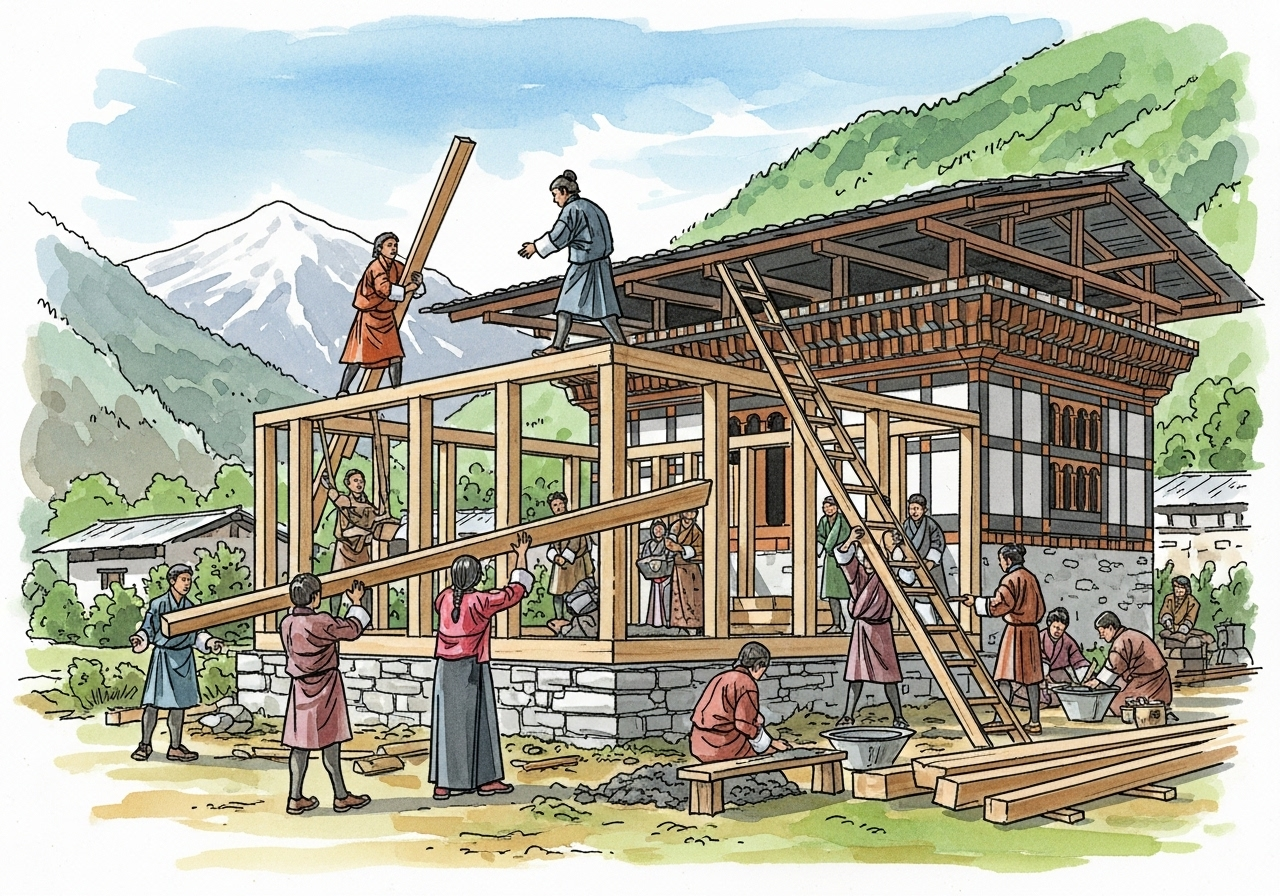
The spirit of community thrives in rural Bhutan, where neighbors support each other in all aspects of life.
In the village, life moves in rhythm with nature. We wake with the sun—and begin our day with intentions as pure as the morning air. Prayer isn’t squeezed into a schedule; it opens the day and gently closes it. Meals are humble, evenings are quiet, and sleep arrives early, wrapped in a sense of peace. Spiritual practice is not a ritual we’ve abandoned—it’s the thread that still holds rural life together.
But in the city, night doesn’t signal rest—it signals more work. People stay up late, hunched over laptops, racing to meet deadlines that never seem to end. And when they’re not working, they’re escaping—from stress, from silence—through parties, noise, or the endless scroll of distraction. The streets stay alive with sound—not of life, but of late-night arguments, honking cars, and drunken shouting. Here, sleep is delayed, peace feels distant, and mornings start with exhaustion, not purpose. In one world, life flows with meaning. In the other, it spins—loud, restless, and ungrounded.
That contrast only deepens when I think of what’s happening across Bhutan today.
Bhutan is changing. Thousands of Bhutanese youth are now applying for work visas abroad. Australia, Canada, the Gulf—places that promise better income and modern living. They send money back, and that helps. Villages get new roofs, new cars, new savings accounts. But when you look deeper, something’s shifting. Fields are left untended. Elders become dependent. Young people come home less and less. Slowly, silently, the fabric of rural life begins to fray.
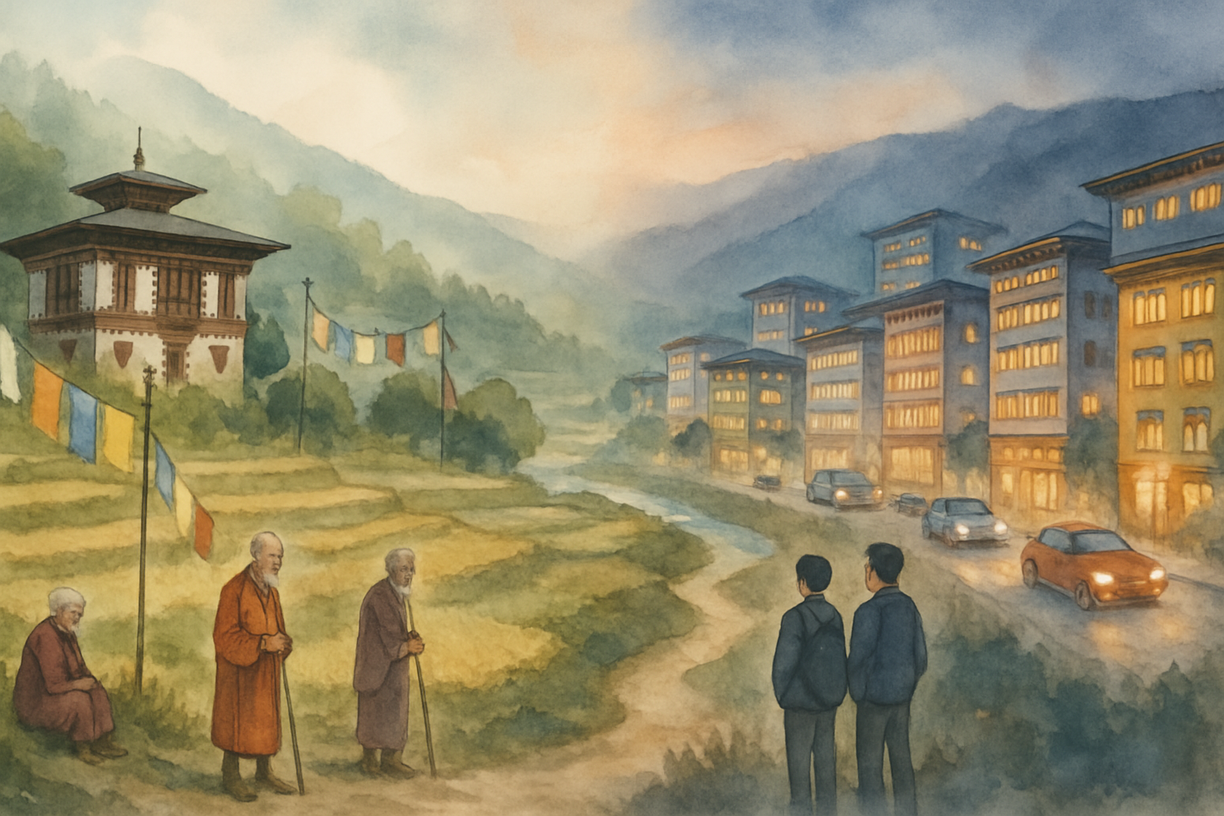
At the crossroads of tradition and tomorrow.
We talk about Gross National Happiness, but are we still practicing it? Or has it become more of a slogan than a lived reality? We speak with pride about our traditions, but we’re also watching them fade in real-time. And I worry that one day, the only place we’ll see them is in tourism brochures or festivals staged for visitors. Our culture doesn’t just live in museums. It lives in the way we greet a neighbor, the way we share a meal, the way we gather to pray before the first harvest. If that disappears, what are we left with?
I’m not against progress. I welcome innovation. I want our country to thrive. But I also believe we must carry our values forward, not bury them under convenience. We can embrace AI, robotics, fintech—all of it—but not at the cost of forgetting who we are. Technology should help us build better lives, not more disconnected ones.
There is wisdom in the soil of our villages. There is peace in the rhythm of rural life. And while cities offer opportunities, they can’t offer roots. That’s something you either carry with you, or lose.
Bhutan today stands between two worlds. One that remembers. One that rushes ahead. The task now isn’t to reject one in favor of the other—but to hold them both, wisely. I still believe we can. But only if we choose to notice what’s slipping away before it’s too late.
Because in the end, progress is only progress if it takes everyone with it—especially the part of ourselves we cannot afford to leave behind.
So I hold on to what I know: In the village, we don't just live—we live well.
Yours sincerely from my Beloved Land of the Thunder Dragon,
Sangay
Open Question:
Ask me anything about Bhutan or share your feedback here. I would love to hear from you.