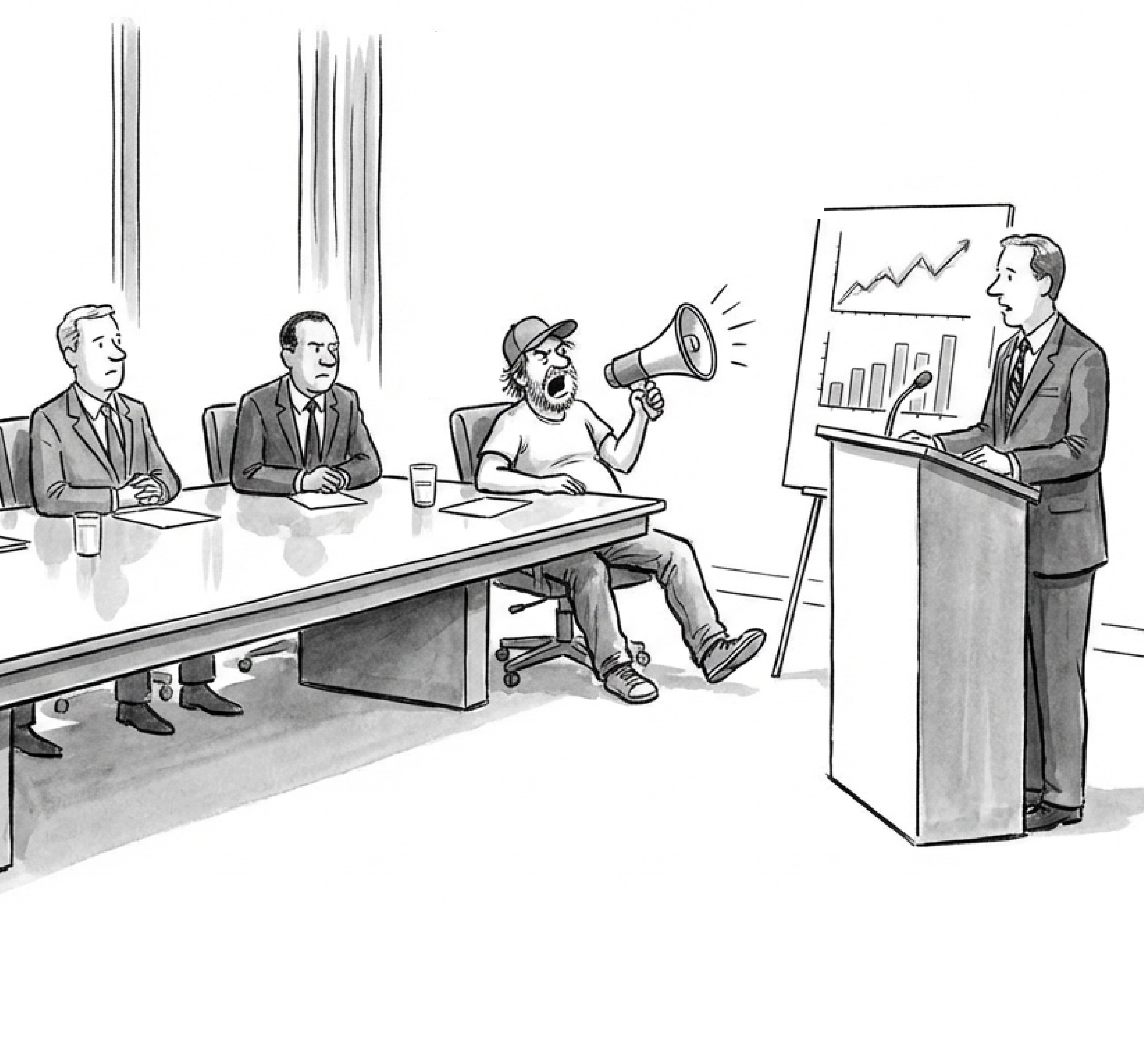

What Comedians Know About Survival (And Leaders Get Wrong)
1. The Anatomy of a "Bomb"
Every comedian knows the exact second they’ve lost the room. It’s a physical chill. It’s the sound of a chair scraping or the rhythmic, blue-light glow of a phone screen illuminating a bored face. In comedy, we call it "bombing."
In leadership, we call it "a standard Tuesday."
Most leaders are content to "broadcast"—to deliver content at a room rather than with it. But if you aren't reading the room, you aren't leading it; you’re just making noise.
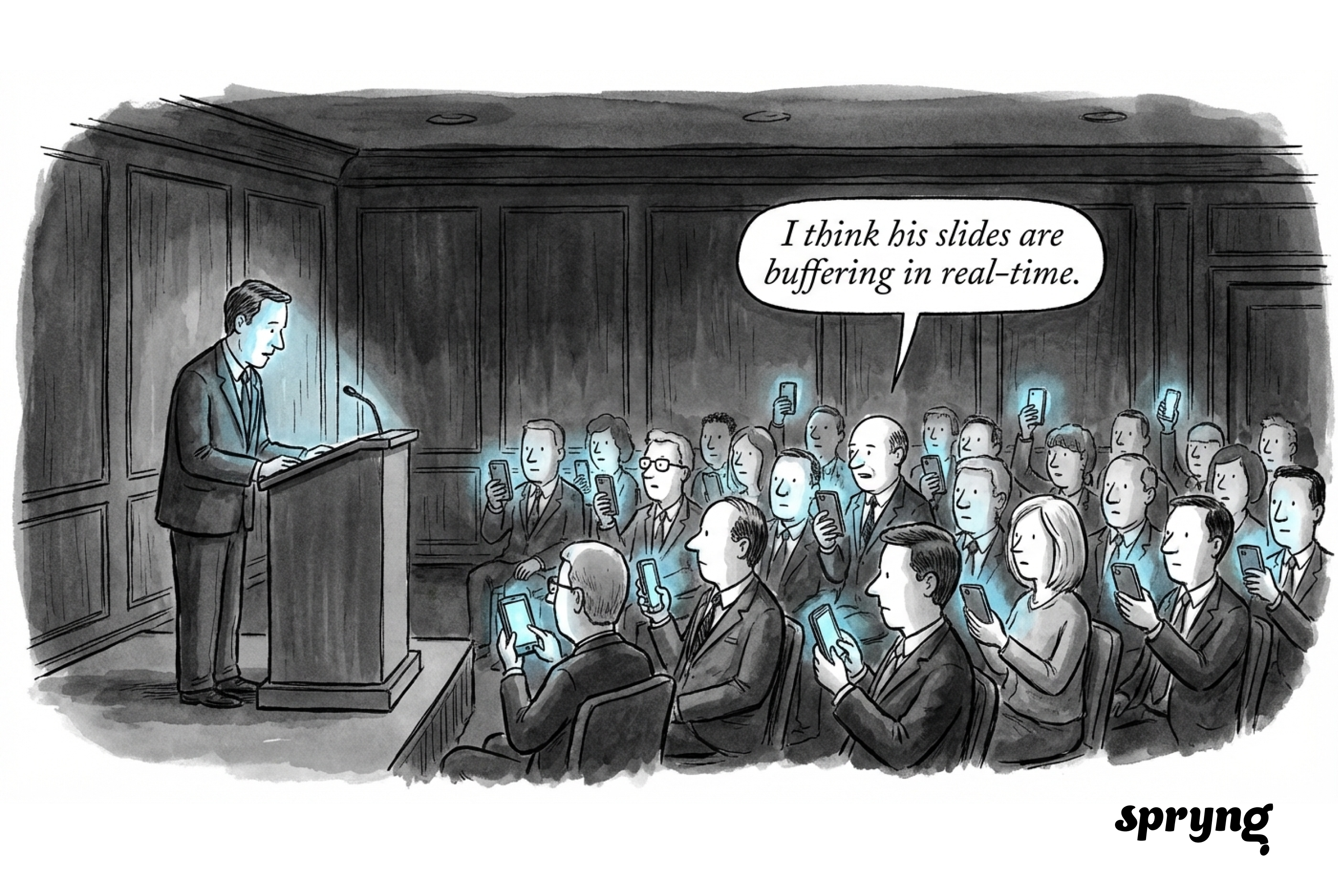
If you fail to communicate with clarity and speed, the 'blue light' of distraction takes over.
The Shift: In Co-Active coaching, we call this Level 3 Listening. It’s the move from hearing words to sensing the "weather." Is the air heavy with skepticism? Is there a frantic, jagged energy under the silence?
Pulse Check: Think of your last meeting. If the room was a weather system, was it a stagnant fog, a brewing storm, or a clear sky? What specific cue told you so?
2. Silence is Data (and usually a Warning)
A comedian treats silence like radar. A "dry" patch in the back corner means: Change the tempo. A hesitant laugh means: They don’t trust me yet.
Leaders, however, mistake silence for agreement. That is a dangerous ego trap. In a boardroom, silence is rarely golden—it’s a symptom of "checked-out" souls or psychological fear.
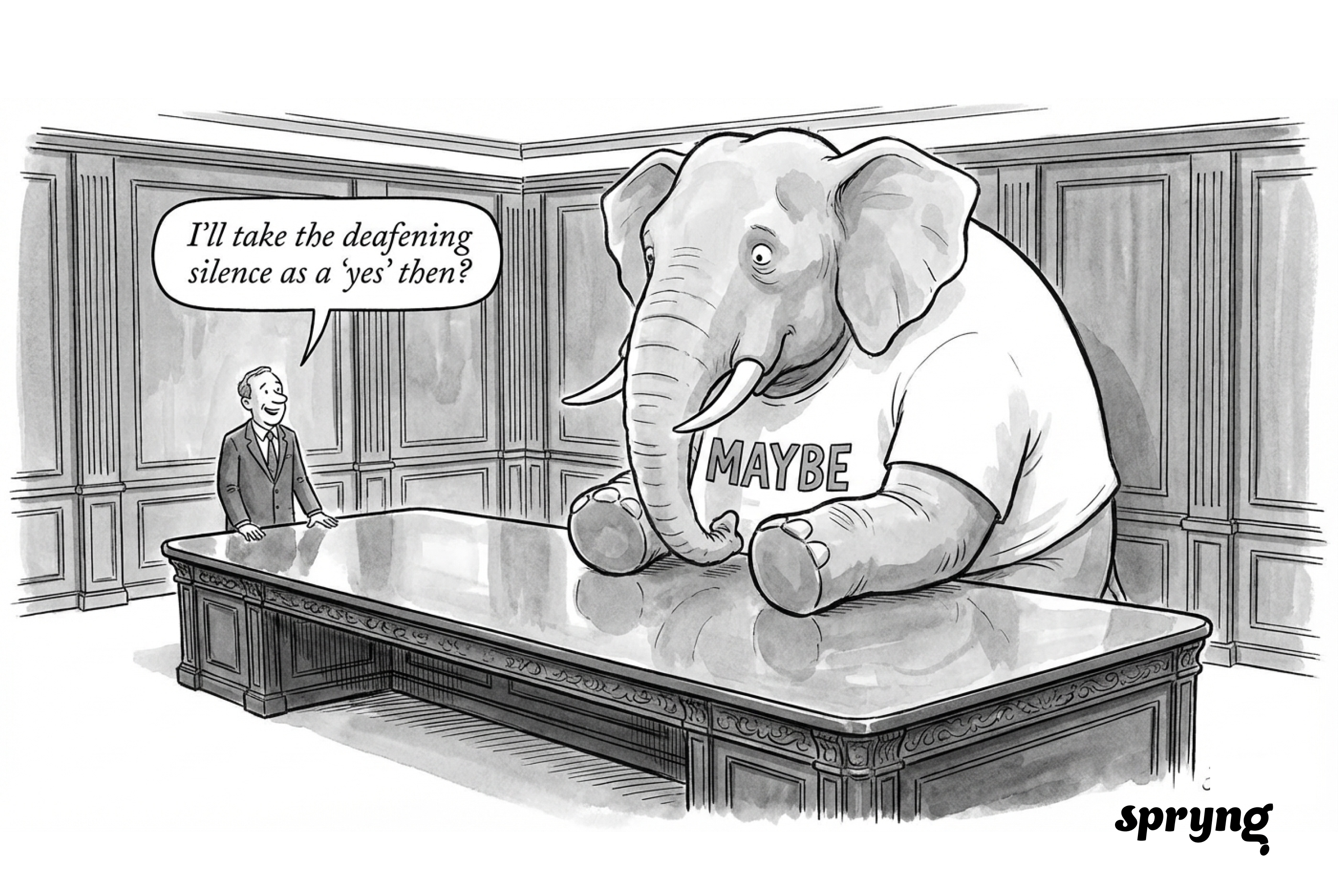
If your team isn't speaking up, don't assume they agree.
The Insight: Stop listening for the "Yes." Start listening for the texture of the "Maybe."
-
The microscopic hesitation before a "sounds good."
-
The person nodding while their body is angled toward the exit.
-
The "polite" silence that masks a total lack of buy-in.
Action: Next time you’re met with a wall of silence, don't move to the next slide. Stop. Say: "The room feels heavy right now. What am I missing?"
3. The "Call-Back" Advantage
Great comics do reconnaissance. They arrive early. They listen to the local bartender. They find the one "inside joke" that makes a room of strangers feel like a tribe.
Most leaders only prepare "up" for the Board. They "wing it" for their teams. This is a fatal mistake. Your team deserves your best material, not your leftovers.
The Strategy: Know their "neighborhood."
-
What is the one frustration keeping your team up at 2:00 AM?
-
What’s the "running joke" in the breakroom?
If you don't know the answer, you aren't listening at Level 3. You're just a tourist in your own company.
Input: List one friction point your team deals with that never appears on an official agenda.
4. Kill the Perfection, Save the Connection
People don’t bond with your polished CV. They bond with your scars.
Comedians use self-deprecation as a bridge. By "bombing" on purpose or admitting a flaw, they disarm the audience. They make it safe for the crowd to be real.
Leaders create Psychological Safety the same way. The moment you say, "I don't have the answer for this yet," or "I handled that last client call poorly," the room breathes.
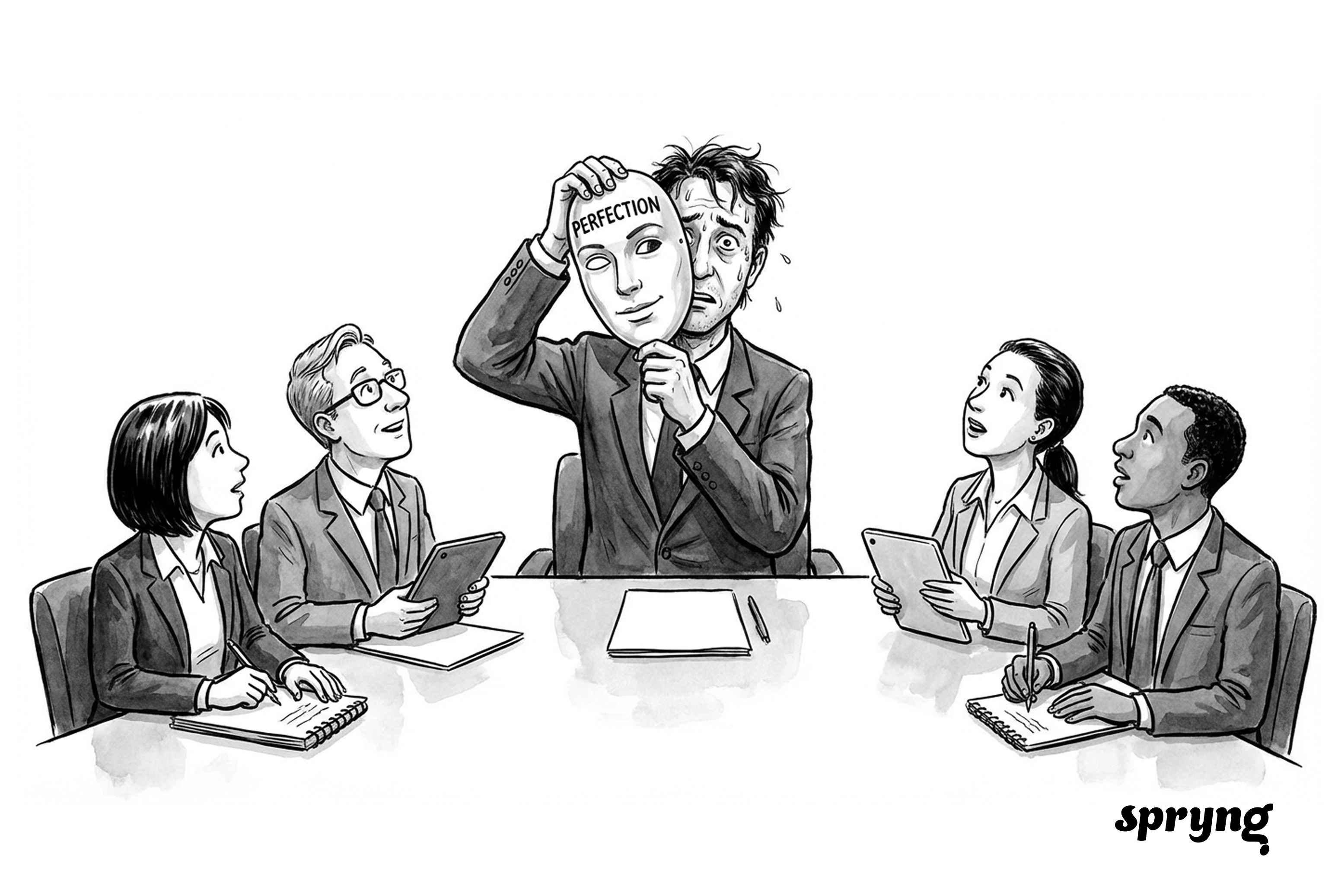
When we prioritize appearing 'perfect' over being authentic, we create a culture where everyone is afraid to show their humanity.
The Hard Truth: A culture of avoidance grows in the shadow of a leader who is never wrong. A culture of courage grows under a leader who is human.
5. Pivot or Perish (Handling the Heckler)
A heckler can ruin a rookie, but for a pro, a heckler is a gift. It’s an opportunity to show the room you are present.
In your world, the "heckler" isn't a drunk guy in the back; it’s the person who asks the passive-aggressive question about the budget just as you’re building momentum.
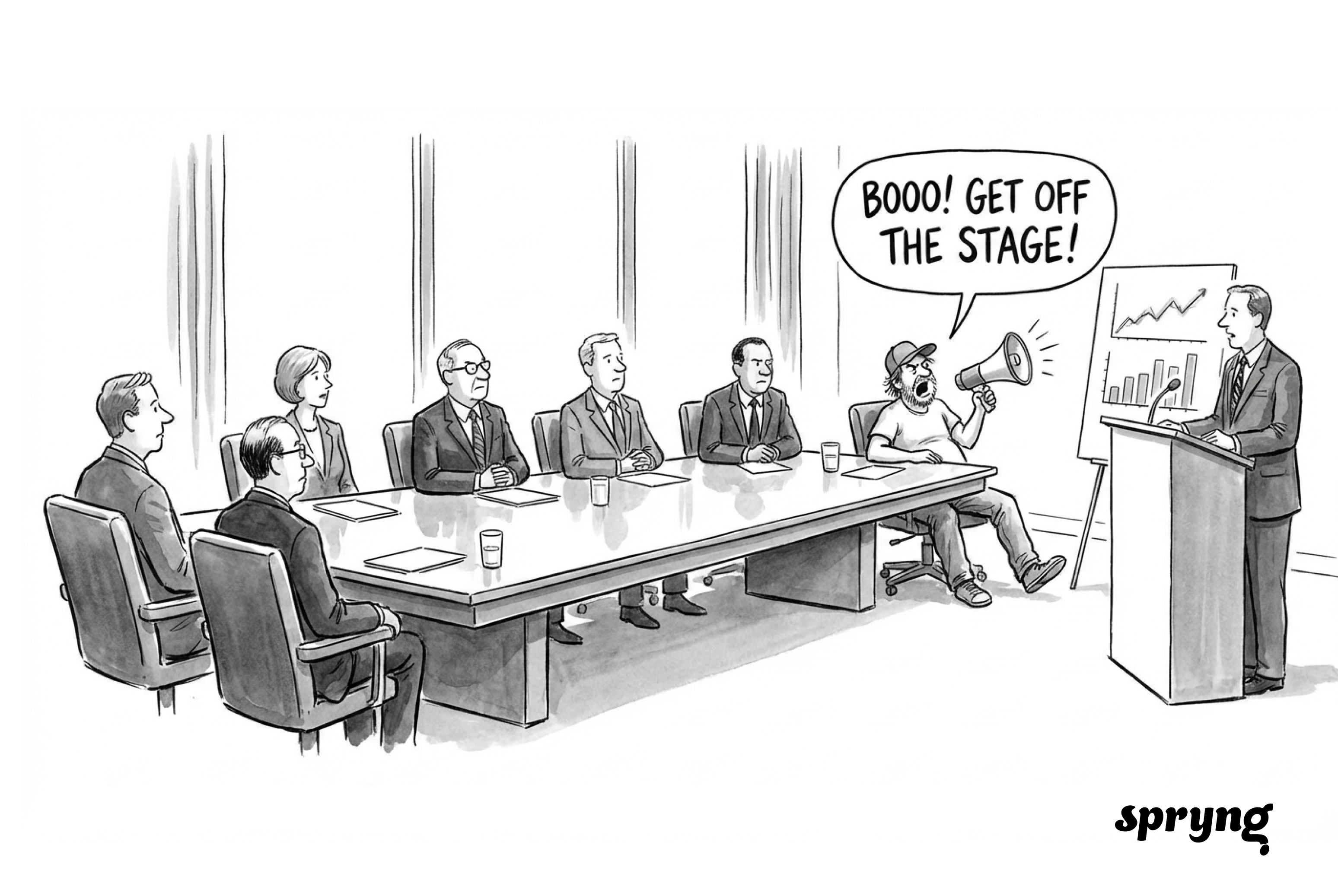
You can have the data, the charts, and the seat at the table, but perfectionism often brings along a 'heckler'—that internal voice telling you to get off the stage before you even finish.
Don't ignore them. Use them. If the room tilts, presence beats preparation. Improvisation isn't a lack of planning—it’s the highest form of it. It says: "I care more about connecting with you than I do about finishing my 20 slides."
The Pivot: Identify one section of your next talk you are willing to cut entirely if the energy shifts. What signal will tell you it's time to pivot?
The Closing Set: Your 3-Point Radar
To sharpen your "Room Reading" muscle, start tomorrow with these three rituals:
-
Audit the Silence: Before you speak, spend 5 minutes just observing. Who is sitting with whom? Where is the tension?
-
Call the Weather: If a meeting feels weird, name it. "I’m sensing some hesitation—can we talk about that before we move on?"
-
The Post-Game Wrap: After the meeting, don't just check the "To-Dos." Note three non-verbal cues you saw. (e.g., "Sarah crossed her arms when we mentioned the budget.")
Bottom Line: Whether you’re holding a microphone or a laser pointer, the goal is the same: Don’t just be heard. Be felt.