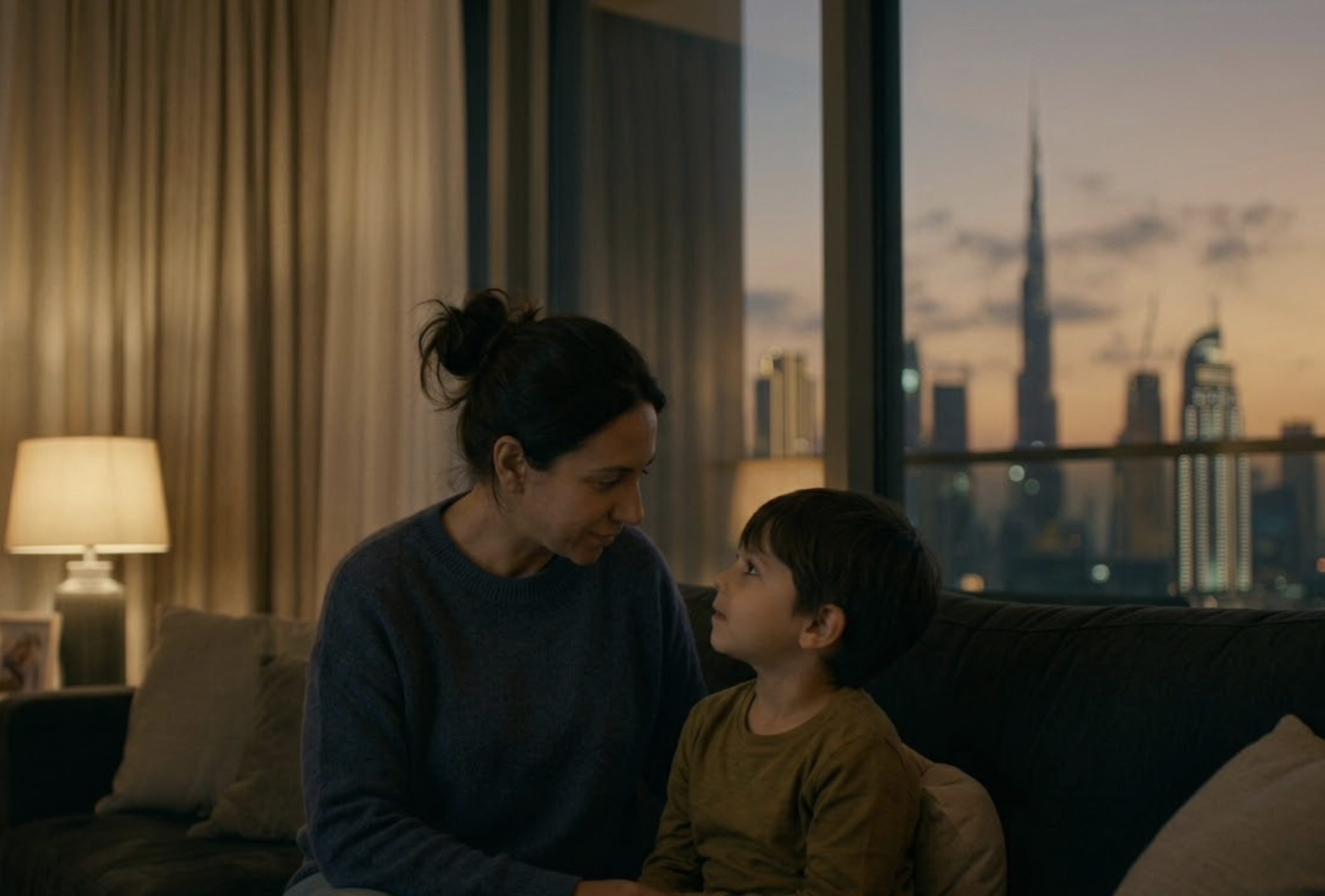

There is a specific kind of silence that follows a sudden flash in the night sky. In the UAE, we have grown used to a "magical bubble" of safety, but when that bubble feels a momentary pressure, our first instinct isn’t for ourselves—it’s for the small faces looking up at us for answers.
When the sky lights up, our job isn’t to explain the complexities of global tension. Our job is to be the anchor.
1. The Power of "Borrowing Calm"
Children are emotional barometers. They don’t just hear your words; they "read" your nervous system. As psychologists often note, children borrow their parents' calm to navigate their own fears.
If you are frantic, they will be too. If you can take a deep breath—even a shaky one—and speak in a steady, low voice, you are telling their brain: “We are together. We are safe.”
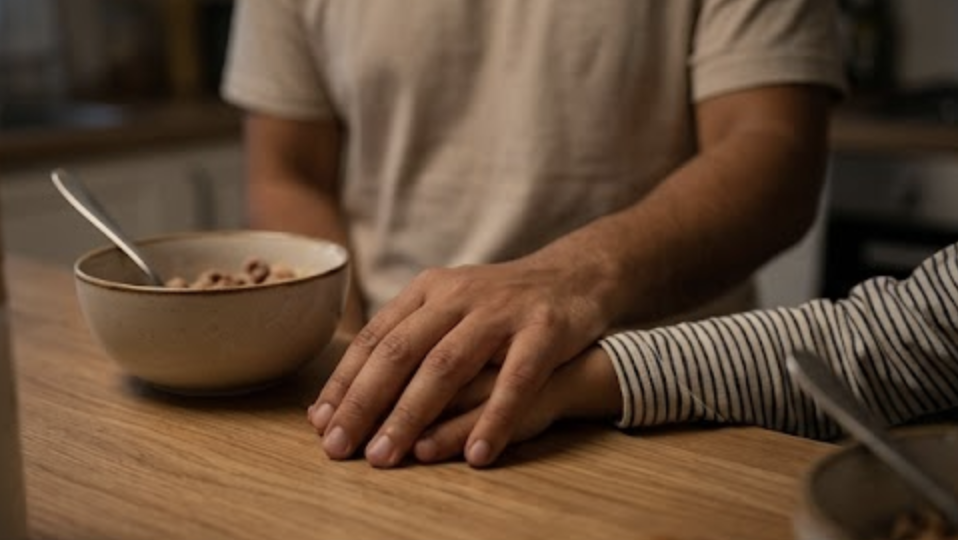
Being the anchor starts with a steady presence. Sometimes, a simple touch is the loudest way to say, "I am here, and you are safe."
2. Information Management (The "Need-to-Know" Basis)
For children, the "why" matters far less than the "where."
-
The Goal: Minimize the threat, maximize the protection.
-
The Script: "You might have seen a light or heard a loud noise. Those are the tools our country uses to keep the sky safe, like a big umbrella in a storm. They worked exactly how they were supposed to."
-
The Boundary: Keep the news off. The repetitive loop of sirens or flashes on a screen is traumatizing. Your voice should be the only "news" they hear.
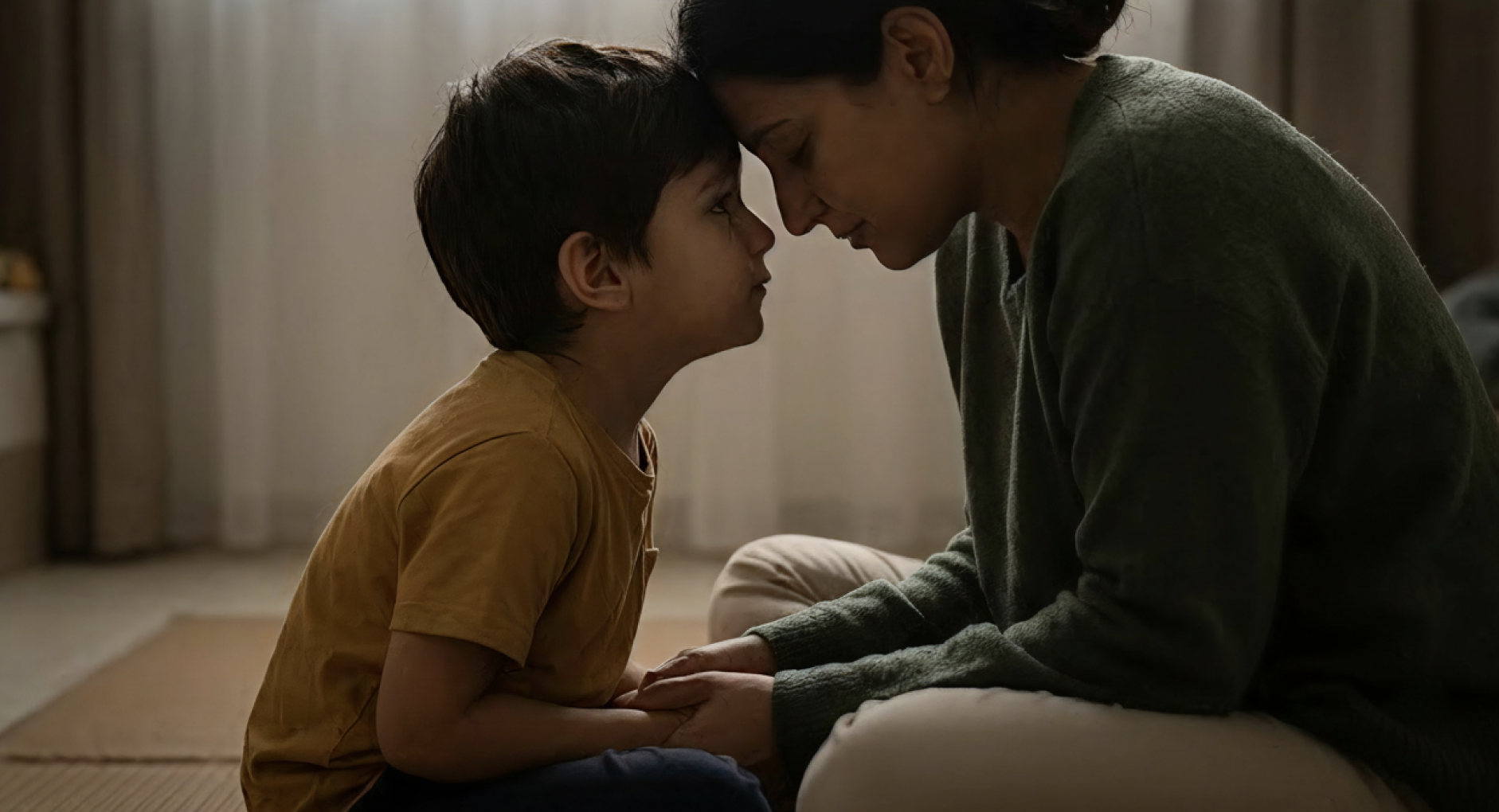
Your calm is contagious. When we meet them at eye level, we provide the psychological armor they need to process the world outside.
3. Guarding the Digital Doorway
In a connected city like ours, the "talk on the playground" moves through WhatsApp groups and TikTok feeds faster than official channels. Your child might not see the sky light up, but they will almost certainly see a forwarded video of it.
-
The "Forwarded" Fear: Curated videos often strip away context and add dramatic music, making events feel more threatening. Regularly ask: "What are people saying in your groups today?" This invites them to offload rumors before they turn into anxiety.
-
Active Mentoring: Don’t just monitor their screen time; check their "emotional intake." If they’ve seen a distressing clip, watch it with them.
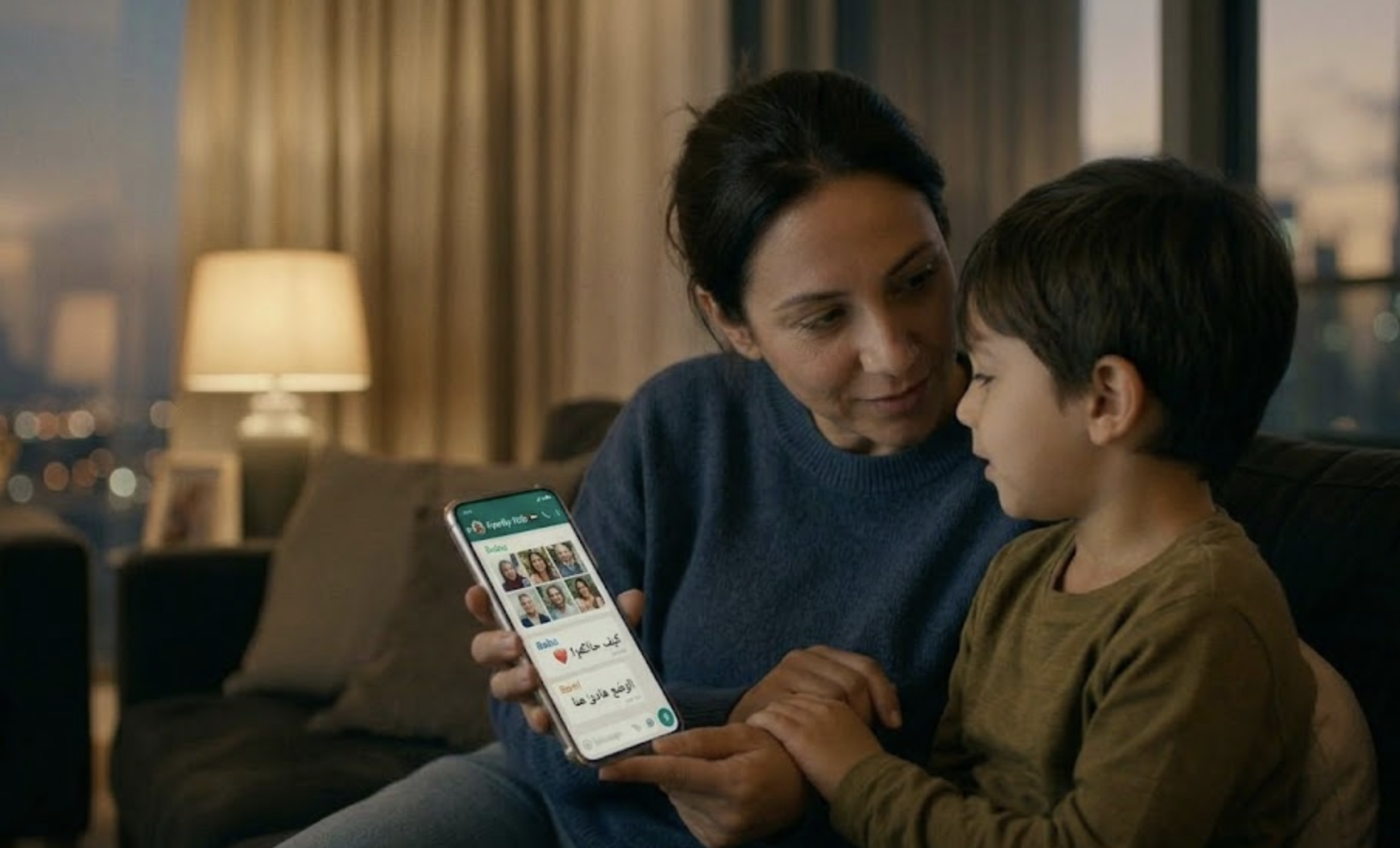
Don't let them navigate the digital noise alone. Turning the screen into a shared conversation helps filter out fear and replace it with facts.
4. Reclaiming the Routine
The best antidote to a "crack in the bubble" is the mundane. The strange mix of normality we experience here is actually a gift.
-
Don't skip the cereal: If the night was restless, make breakfast the most normal part of the day.
-
The "Anchor" Moments: Stick to the bedtime stories, the football practice, and the tuck-ins. Routine is the physical manifestation of safety.
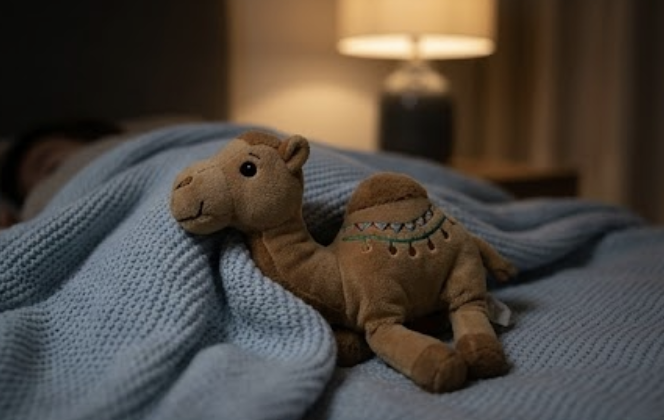
In times of uncertainty, the most powerful thing we can do is keep the bedtime stories going. Routine is the ultimate antidote to anxiety.
5. Be the "Steady in the Storm"
Living in a region where history is active can feel heavy. But remember: you are building your child’s resilience right now. By answering their questions with honesty but without the weight of adult anxiety, you are giving them psychological armor.
The sky might light up, but the light inside your home—the warmth of a hug, the steadiness of your hand—is much brighter.
Let us know how you found this post