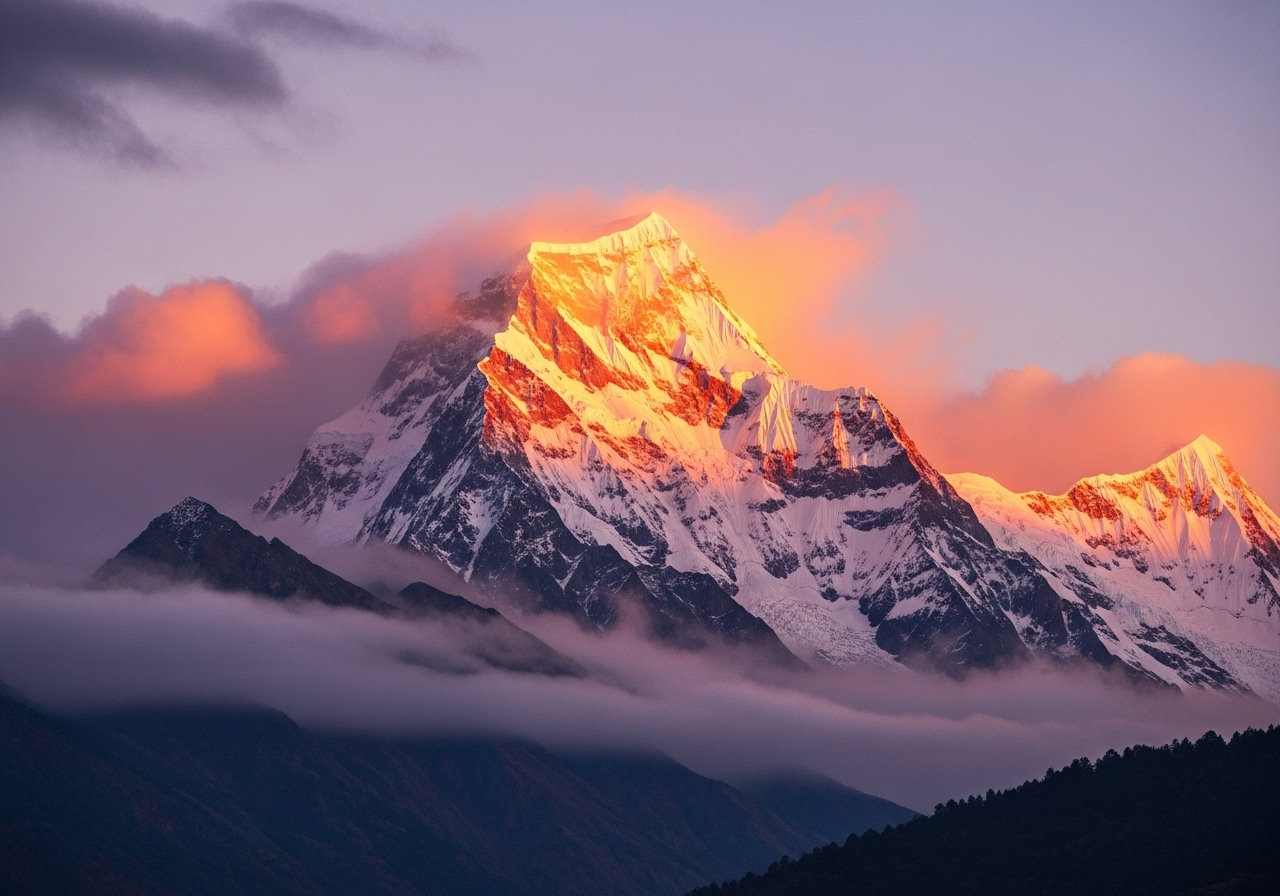

In an age of relentless ambition—scaling Everest, drilling the ocean floor, dreaming of Mars colonies—Bhutan offers a striking counterpoint. Tucked into the Himalayas, this small kingdom moves to a different rhythm. While the world chases triumph over nature, Bhutan leans into a quieter, more radical question: What if true progress isn’t control at all, but coexistence?
Nature Isn’t a Resource. It’s a relationship.
Across much of the industrialized world, nature is seen as something to extract, overcome, or engineer. Bhutan tells a different story. Here, nature is not a commodity—it’s kin. Guided by Vajrayana Buddhism and indigenous Bon beliefs, Bhutanese culture treats the environment as a living, spiritual system.
According to Buddhist philosophy, all life is made of five elemental forces: earth, water, fire, air, and space. These aren’t just physical elements; they’re sacred energies in delicate balance. When that balance is disturbed, nature responds—not out of vengeance, but as a reflection of broken harmony.
This worldview is more than metaphysical—it’s a moral compass. When glaciers burst, or floods rage through valleys, many Bhutanese don’t simply blame climate change. They see a deeper signal: the spirits of the land are grieving. Sacred sites in the mountains, lakes, and forests are inhabited by powerful deities, and when these spaces are disturbed—by disrespect, pollution, or greed—nature itself speaks back.
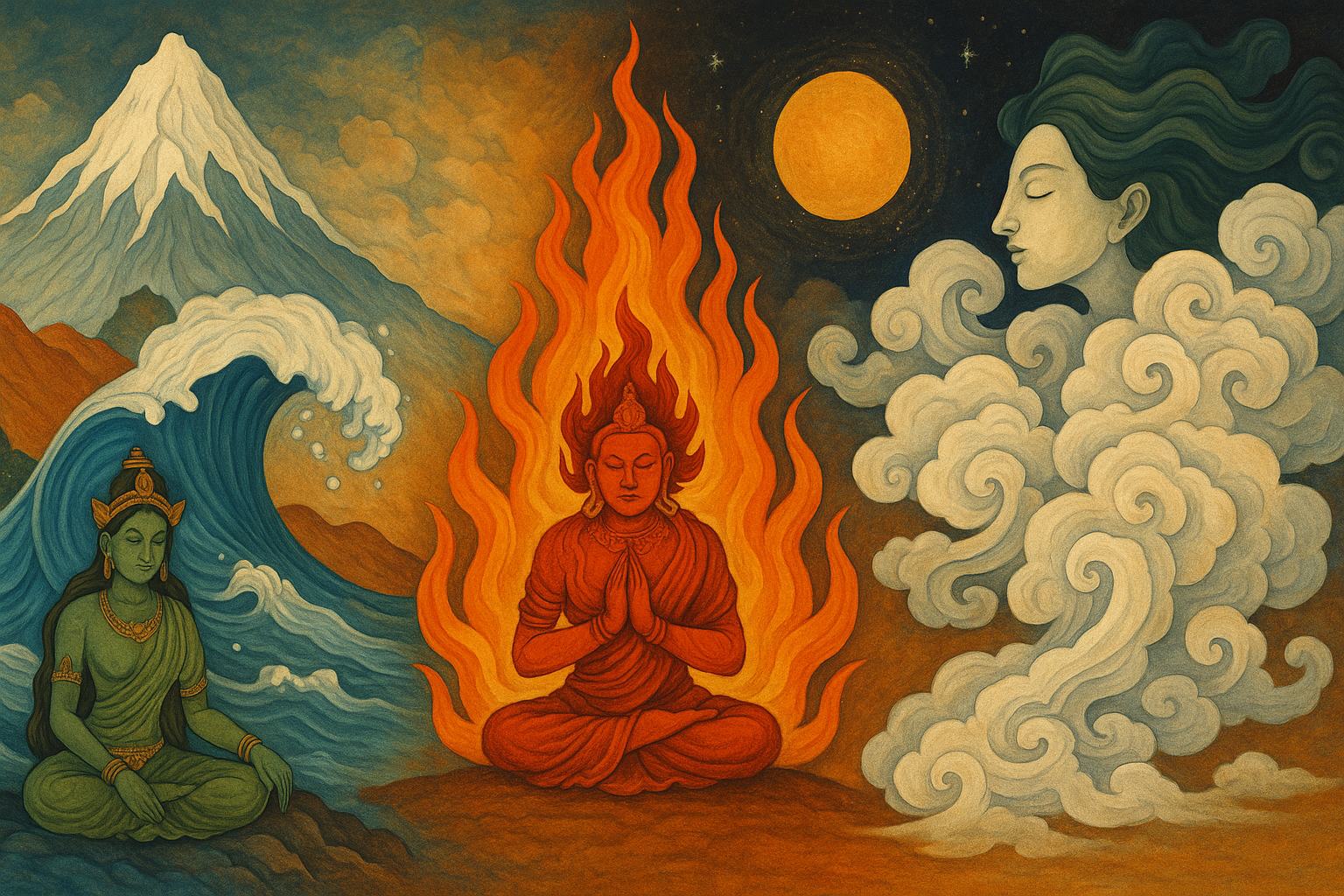
In Bhutanese traditions the five elemental forces are: earth, water, fire, air, and space.
Gankar Punzum — The Mountain You Can't Climb
Around the world, towering peaks are seen as conquests—summits to plant flags on. But Bhutan has made an extraordinary choice: its highest mountains remain unclimbed. Gankar Punzum is the highest mountain in Bhutan and the highest unclimbed mountain in the world, with an elevation of 7,570 metres (24,836 ft). In Dzongkha language, its name means "White Peak of the Three Spiritual Brothers".
It remains unclimbed not because it's inaccessible, but because it’s sacred.
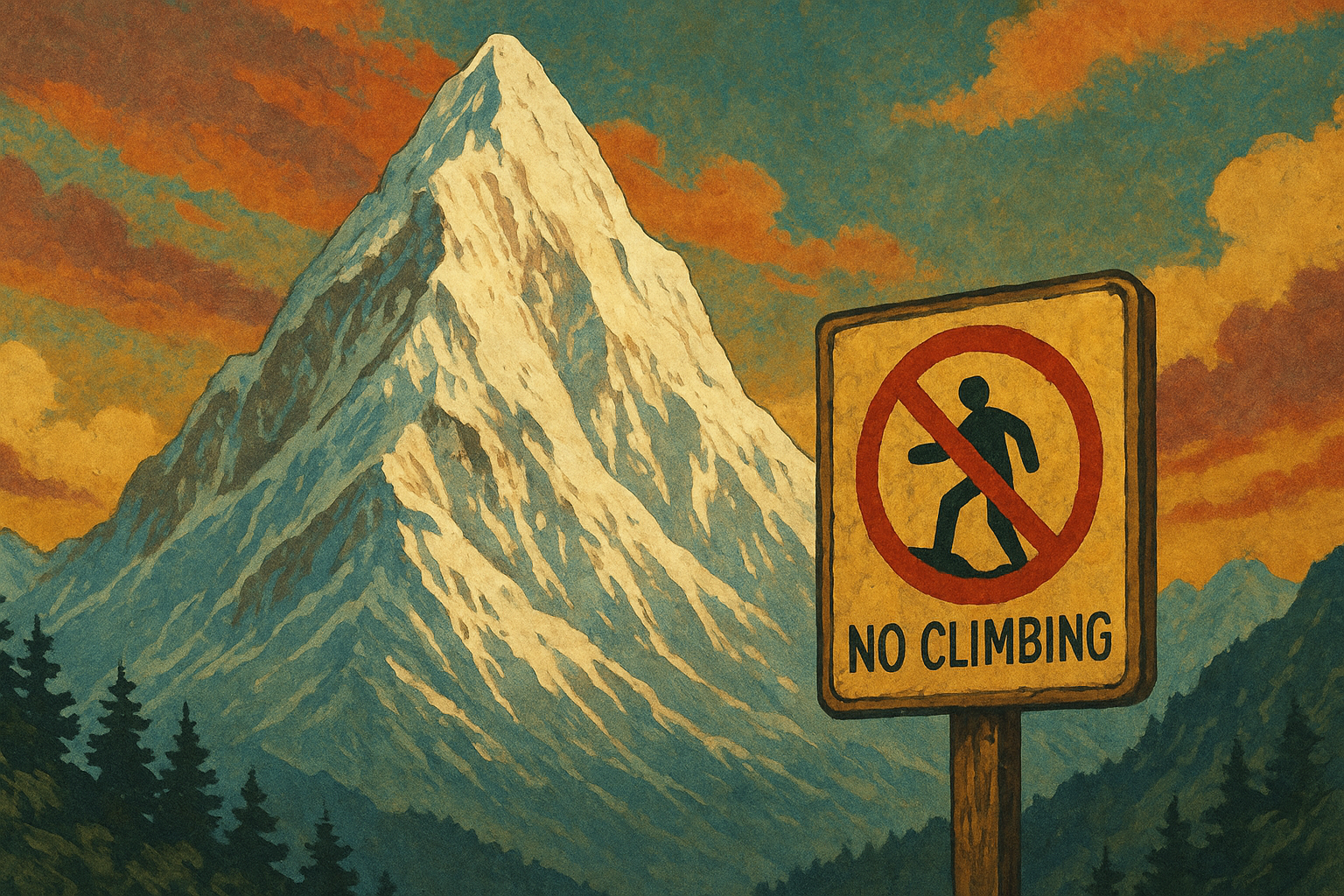
At 7,570 meters above sea level Gankar Punzum is the highest unclimbed peak in the world and is likely to remain unconquered for many more generations to come.
To Bhutanese people, these peaks are home to protector deities. Climbing them would be a spiritual trespass. This national decision represents something radical in today’s world: reverence over reach. Even road construction bends around sacred sites rather than bulldoze through them.
Where other nations prize convenience and domination, Bhutan practices environmental humility. It’s not that development doesn’t happen here—it’s that it happens thoughtfully.
The Real Cost of Conquest
From oil rigs in oceans to trash on Everest, the global obsession with control is costing us dearly. Nature is gasping. Biodiversity is vanishing. Even outer space is littered with debris. This mindset—that nature exists to serve humans—has pushed the planet to its brink.
But Bhutan offers an antidote.
Here, disturbing a sacred mountain isn’t just a mythological error—it’s a social and ecological one. Disasters are seen as feedback loops—symptoms of imbalance. Reverence, not recklessness, is the path forward.
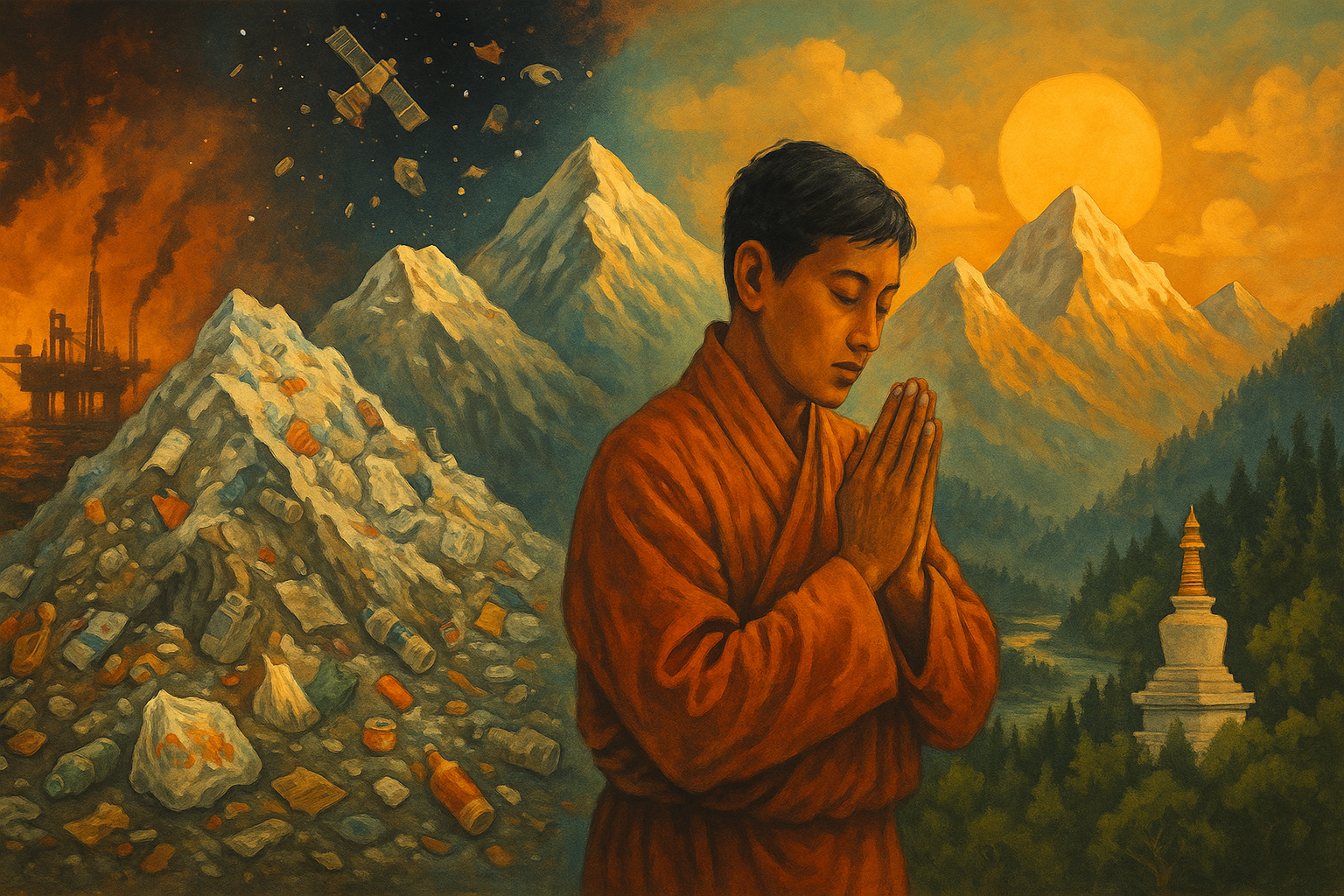
Bhutan has chosen not to exploit their mountains and taken a path that honours both nature and spirituality
A Small Nation. A Global Lesson.
Bhutan is not a utopia. It faces economic challenges, urbanization, and climate threats. But it possesses something many wealthier nations have lost: a moral code for living with the Earth.
Its forests aren’t just green—they’re wise. Its mountains don’t just inspire—they teach.
And in a world consumed by the desire to conquer, Bhutan reminds us of something beautifully subversive: that choosing not to climb, not to exploit, not to dominate… is a kind of greatness too.
The Bhutanese path isn’t anti-progress. It’s a redefinition of it. Progress that listens. Progress that honors. Progress that protects.
How do you feel about the future of our planet?
References