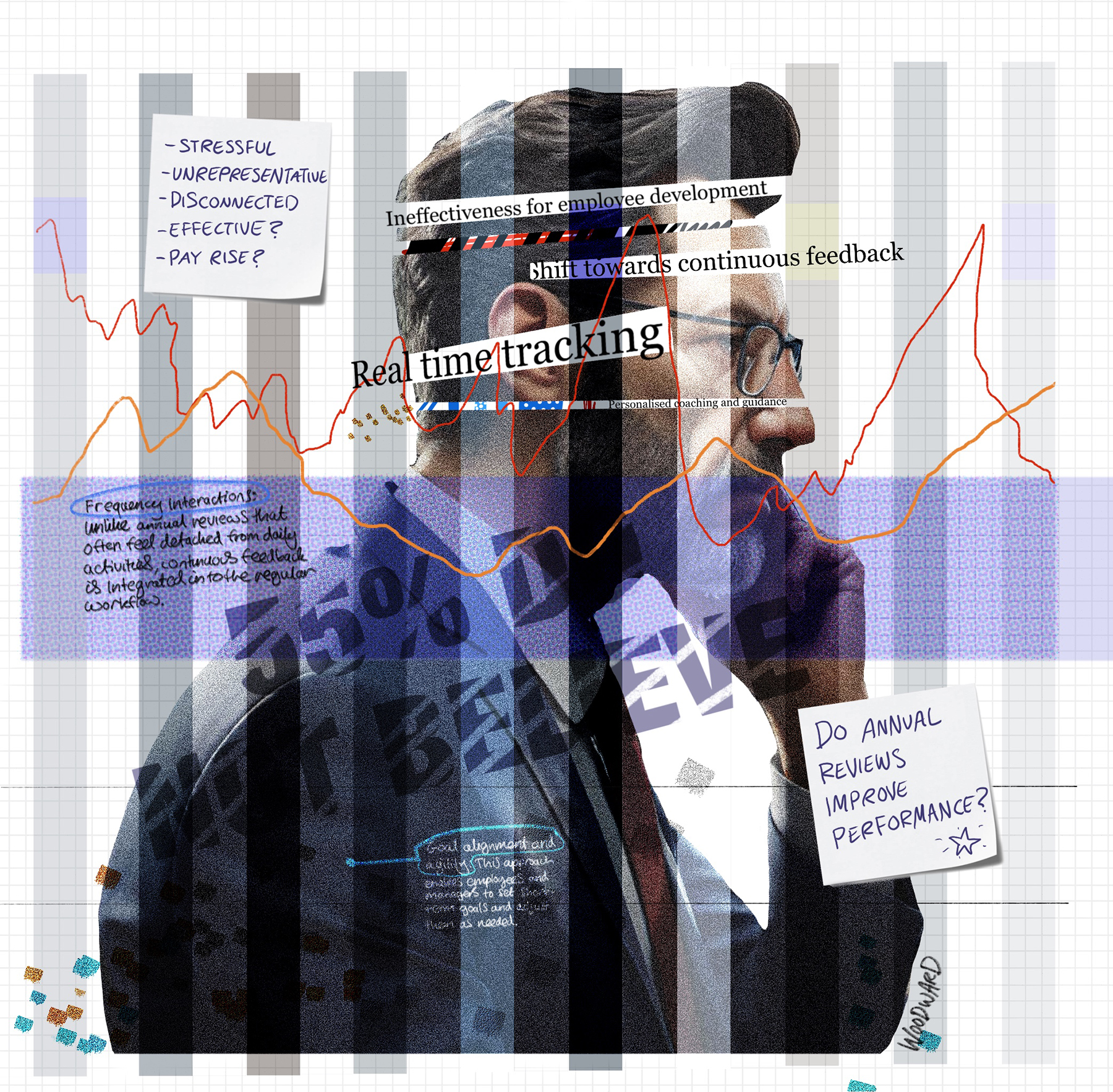

Jack Dorsey, the founder of Twitter, and who now runs Block (formerly knows as Square) made the news recently when he said he's ditching annual performance reviews. He's far from the first one to do so.
At Spring we are biased and stand behind Jack and the many other pioneering companies that have ditched or modified their approach to performance reviews.
Let's explore.

[Photos: Joe Raedle/Getty Images; Mathias Reding/Pexels;
1. Traditional Approach to Employee Performance Reviews
The traditional model of annual employee performance reviews has been a staple in the corporate world for decades. Historically, these reviews have been the primary method for assessing an employee's contributions and determining promotions and pay raises. However, this method is increasingly being scrutinized for its effectiveness and relevance in the modern workplace. The article will explore the shortcomings of this traditional approach.
**Bad news for people in the survey business. A 2019 survey from Workhuman Analytics & Research found that 55% of workers do not believe annual reviews improve their performance. **
2. The Dislike Among Employees
Annual surveys often elicit a sense of dread among employees. Many find them stressful, unrepresentative of their overall performance, and disconnected from their daily work.
But what are the reasons employees hate these surveys so much?

What percentage of workers believe annual reviews do not improve their performance?